
Ja, emotionale Appelle können in Vorstellungsgesprächen funktionieren, aber nur wenn sie sorgfältig eingesetzt werden. Sie helfen Ihnen, eine Verbindung zu Interviewern aufzubauen, Ihre Begeisterung hervorzuheben und zu beeinflussen, wie Sie wahrgenommen werden. Sie können jedoch nach hinten losgehen, wenn sie übertrieben oder als unaufrichtig wahrgenommen werden. Hier ist, was Sie wissen müssen:
-
Zwei Arten von emotionalen Appellen:
- Selbstfokussiert: Heben Sie Ihre Fähigkeiten und Erfolge hervor.
- Fremdenfokussiert: Bauen Sie Rapport und Verbindung auf.
-
Warum sie wichtig sind:
Arbeitgeber schätzen oft Begeisterung. Beispielsweise bevorzugen fast die Hälfte (47%) der US-amerikanischen Arbeitgeber Kandidaten, die engagiert und energisch wirken, gegenüber ruhigen Kandidaten. -
Risiken, die vermieden werden sollten:
- Übertraining kann dazu führen, dass Sie roboterhaft klingen.
- Übermäßige Verwendung emotionaler Sprache könnte manipulativ wirken.
- Kulturelle Unterschiede in der emotionalen Ausdrucksweise können zu Unstimmigkeiten führen.
-
Wie man sie effektiv einsetzt:
- Teilen Sie persönliche Geschichten mit klaren Ergebnissen (z. B. STAR-Methode).
- Balancieren Sie Emotion mit Fakten und Logik.
- Üben Sie die Präsentation mit Tools wie KI-Interviewsimulation.
Achten Sie auf Reaktionen des Interviewers wie Lächeln, Nicken oder Komplimente, um Ihre Auswirkung zu bewerten. Emotionale Appelle funktionieren am besten, wenn sie sich natürlich anfühlen und durch Beweise gestützt werden.
Wann sind strategische emotionale Appelle am wirksamsten?
Über emotionales Storytelling hinaus gibt es viele Möglichkeiten, KI in Ihrer Jobsuche zu nutzen, um Ihre Gesamtpräsentation zu verfeinern.
Das Problem: Warum emotionale Appelle in Vorstellungsgesprächen oft fehlschlagen
Emotionale Appelle können in Vorstellungsgesprächen ein zweischneidiges Schwert sein. Während sie helfen können, eine Verbindung aufzubauen, können sie auch nach hinten losgehen und Sie unaufrichtig oder manipulativ wirken lassen – möglicherweise kostet Sie das den Job.
Falsch oder manipulativ wirken
Übertraining von Antworten kann dazu führen, dass Sie roboterhaft klingen, was schnell Ihre Authentizität untergräbt. Die Nutzung von Echtzeit-Coaching kann Ihnen helfen, einen natürlichen Fluss zu bewahren und gleichzeitig auf Kurs zu bleiben. Der Psychologe Ron Friedman erklärt, dass Skript-Antworten natürliche emotionale Töne entfernen und Kandidaten wie "Automaten" statt wie echte, nachvollziehbare Menschen klingen lassen [7]. Kandidaten, die sich stark auf auswendig gelernte Antworten verlassen, sprechen auch tendenziell schneller – etwa 140 Wörter pro Minute – was die emotionale Wirkung ihrer Worte vermindert [7].
Selbst etwas so Einfaches wie eine schlecht vorgetragene Nachfrage wie "Beantwortet das Ihre Frage?" kann besänftigend oder schlimmer noch herablassend wirken, wenn es nicht mit dem richtigen Ton gesagt wird [7]. Ebenso können frühere Herausforderungen aus einer "Opfer"-Perspektive erzählt oder andere beschuldigt werden, was ernsthafte Warnsignale auslöst und mangelndes Selbstbewusstsein signalisiert, wie Friedman anmerkt [7][8].
"Es gibt eine Sache, die ein gut durchgeführtes Vorstellungsgespräch offenbaren kann, das kein Lebenslauf, keine Empfehlung und kein Beispielprojekt bieten kann: einen Einblick in den emotionalen Ton eines Kandidaten." - Ron Friedman, Psychologe [7]
Ein weiterer Fallstrick? Zu hart versuchen zu überreden, indem Sie Ihre Sprache mit Emotion überlasten. Dies kann dazu führen, dass Ihre Antworten berechnet statt aufrichtig wirken [10]. Authentizitätsprobleme wie diese werden noch komplexer, wenn kulturelle Unterschiede in der emotionalen Ausdrucksweise eine Rolle spielen.
Kulturelle Unterschiede und situative Unstimmigkeiten
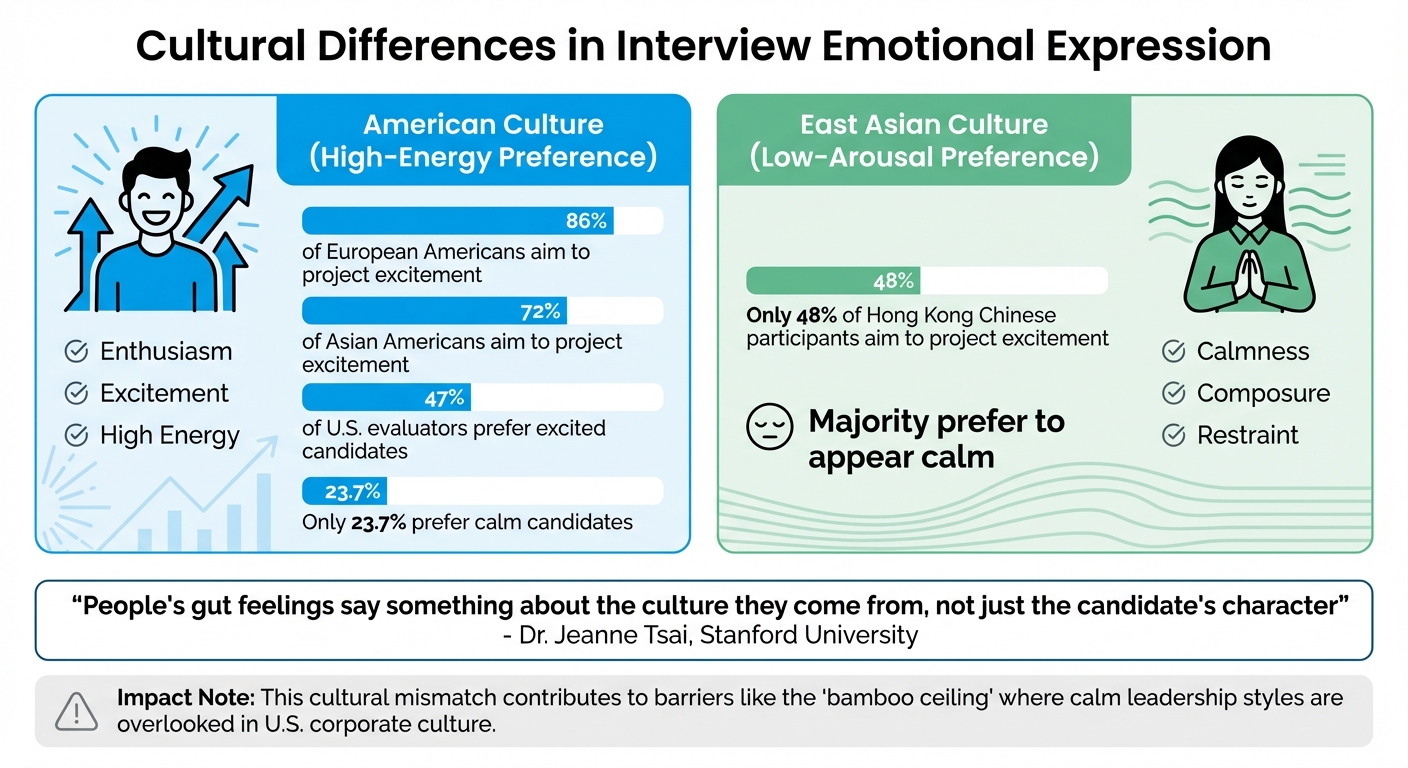
Kulturelle Erwartungen fügen emotionalen Appellen in Vorstellungsgesprächen eine weitere Komplexitätsebene hinzu. Was als der "richtige" emotionale Ton gilt, hängt oft von kulturellen Normen ab. Forscher bezeichnen dies als "ideale Affektivität" – die Emotionen, die Menschen schätzen und zu projizieren versuchen. Beispielsweise bevorzugt die amerikanische Kultur hochenergetische Emotionen wie Begeisterung und Aufregung, während viele ostasiatische Kulturen Ruhe und Gelassenheit priorisieren [9][2].
Dieser Unterschied kann Herausforderungen für Kandidaten aus Kulturen schaffen, die niedrig-erregte Emotionen schätzen. Eine 2018 in Emotion veröffentlichte Studie hebt diese Unstimmigkeit hervor. Sie fand heraus, dass 86% der europäischen Amerikaner und 72% der asiatischen Amerikaner darauf abzielten, Aufregung in Bewerbungen zu projizieren, im Vergleich zu nur 48% der Hongkonger Chinesen, die ruhig wirken wollten. Als US-amerikanische Teilnehmer identische Kandidaten bewerteten, bevorzugten 47% den "aufgeregten" Kandidaten, während nur 23,7% den "ruhigen" Kandidaten bevorzugten [9][2].
"Menschen denken, dass ihre Bauchgefühle etwas über den Charakter der anderen Person aussagen, aber unsere Daten deuten darauf hin, dass die Bauchgefühle der Menschen auch etwas über die Kultur aussagen, aus der sie selbst stammen." - Dr. Jeanne Tsai, Direktorin des Culture and Emotion Lab, Stanford University [9][2]
Dieser kulturelle Bias kann zu Barrieren wie der "Bambusdecke" beitragen, bei der asiatische Amerikaner, die ruhige Führungsstile zeigen, für Top-Positionen übersehen werden. Die US-amerikanische Unternehmenskultur setzt Führung oft mit Lautstärke und offensichtlicher Begeisterung gleich, was ruhigere, besser zusammengesetzte Kandidaten benachteiligt [9][2]. Darüber hinaus kann die Betonung der Einstellung für "kulturelle Passung" basierend auf emotionaler Energie unbeabsichtigt die Vielfalt am Arbeitsplatz einschränken und Kandidaten mit ruhiger Ausstrahlung ausschließen, die möglicherweise besser für bestimmte Rollen geeignet sind [9].
Funktionieren emotionale Appelle? Was Forschung und Praxis zeigen
Emotionale Appelle können entweder zu Ihrem Vorteil funktionieren oder völlig nach hinten losgehen. Der gleiche emotionale Ansatz, der bei einem Interviewer funktioniert, könnte einen anderen je nach Faktoren wie Authentizität, Intensität und Kontext entfremden. Lassen Sie uns erkunden, wie emotionale Taktiken entweder Vertrauen aufbauen oder Ihre Glaubwürdigkeit schädigen können.
Wie echte emotionale Verbindungen Vertrauen aufbauen
Wenn effektiv eingesetzt, können emotionale Appelle starke, dauerhafte Verbindungen schaffen. Eine im März 2015 im American Journal of Sociology veröffentlichte Studie untersuchte Einstellungspraktiken in Elite-Branchen wie Investmentbanking, Recht und Beratung. Sie fand heraus, dass Recruiter sich oft auf "emotionale Energie" als entscheidenden Faktor in finalen Einstellungsrunden verließen. Kandidaten, die echte Aufregung und Begeisterung auslösten, übertrafen oft diejenigen mit stärkeren technischen Fähigkeiten [1][5].
Storytellingforschung unterstützt dies und zeigt, dass authentische Narrative die Gehirnaktivität zwischen dem Geschichtenerzähler und dem Zuhörer ausrichten können, was Empathie und Verbindung viel besser fördert als die Präsentation trockener Fakten [12]. Das Teilen einer aufrichtigen persönlichen Geschichte – nicht einer einstudierten oder übermäßig polierten – kann natürlich diese Art von Bindung auslösen. Wie Matthew D. Rocklage von der Kellogg School of Management sagt: "Es gibt eine starke genug Verbindung zwischen Überzeugung und Emotion in den Köpfen der Menschen, dass sie weiterhin Emotion verwenden, selbst angesichts eines Publikums, bei dem dieser Ansatz nach hinten losgehen kann" [4].
In US-amerikanischen Berufsumgebungen signalisiert echte Begeisterung oft sowohl Leidenschaft für die Rolle als auch Ausrichtung mit der Unternehmenskultur.
Wenn emotionale Appelle Ihre Glaubwürdigkeit schädigen
Das heißt, die Intensität Ihres emotionalen Appells ist entscheidend. Eine 2023 Studie im Human Resource Management Journal enthüllte, dass Kandidaten, die intensive Begeisterung zeigten, oft als weniger geeignet bewertet wurden als diejenigen, die ein gemäßigteres Maß an Aufregung zeigten. Über-die-Spitze-Begeisterung wurde als "unangemessen" für professionelle Einstellungen angesehen [11].
Die Grenze zwischen Begeisterung und Manipulation kann auch dünn sein. Forschung zeigt, dass 85% bis 99% der Studenten "leichte Imageerstellung" betreiben, eine Taktik, die darauf abzielt, sich als bessere Kandidaten darzustellen [3]. Während ein wenig Selbstförderung in frühen Interviews helfen kann, kann es zu weit gehen und als Arroganz wirken, was letztendlich Ihre Glaubwürdigkeit schädigt [3].
In hochriskanten Einstellungsszenarien, in denen Interviewer für ihre Entscheidungen verantwortlich sind, werden emotionale Appelle oft einer zusätzlichen Überprüfung unterzogen. Interviewer neigen dazu, faktische Beweise und Genauigkeit gegenüber emotionalen Displays zu priorisieren, was sie weniger empfänglich für übermäßige emotionale Taktiken macht. Dies unterstreicht die Wichtigkeit von Perfektionierung Ihrer Interviewvorbereitung, um das richtige Gleichgewicht zu finden. Dies erklärt, warum Strategien, die in einer lockeren, niedrig-Druck-Einstellung funktionieren könnten, oft flach fallen, wenn die Einsätze real sind.
sbb-itb-20a3bee
Wie man emotionale Appelle effektiv einsetzt
Um emotionale Appelle wirklich wirkungsvoll zu machen, müssen sie sich echt anfühlen, durch Fakten gestützt werden und durch Üben verfeinert werden. Der Trick liegt darin, das richtige Gleichgewicht zu finden – Ihre Geschichte sollte Ihre Glaubwürdigkeit verbessern, nicht schmälern.
Lösung 1: Teilen Sie persönliche Geschichten, die resonieren
Ein effektiver Ansatz ist die Verwendung der STAR-Methode (Situation, Task, Action, Result). Die Karriereberaterin Marlo Lyons schlägt vor, dieser Struktur einen "Takeaway" hinzuzufügen, der Ihre Erfahrungen direkt mit der Rolle verbindet, die Sie anstreben. Dies zeigt sowohl Selbstbewusstsein als auch berufliches Wachstum [13]. Vermeiden Sie es, einstudiert zu klingen – erstellen Sie 3–4 anpassbare Geschichten mit "Ich"-Aussagen. Beispielsweise könnten Sie sagen: "Ich arbeitete mit dem Team zusammen, um den Algorithmus zu optimieren, was die Ausführungszeit um 70% reduzierte."
Details sind wichtig. Verwenden Sie lebendige, sensorische Sprache, um Herausforderungen zu beschreiben, und verankern Sie Ihre Geschichte mit messbaren Ergebnissen – denken Sie an Prozentsätze, Dollarersparnisse oder Zeitreduktionen. Das Teilen einer schwierigen Erfahrung oder sogar eines Misserfolgs zusammen mit dem, was Sie daraus gelernt haben, kann Vertrauen und Verbindung aufbauen.
Lösung 2: Mischen Sie Emotion mit Fakten und Empathie

Sich nur auf Emotion ohne Beweise zu verlassen, kann nach hinten losgehen. Starke Antworten schlagen ein Gleichgewicht zwischen Ethos (Glaubwürdigkeit), Pathos (Emotion) und Logos (Logik) [15]. Verbinden Sie Ihre emotionale Geschichte immer mit den spezifischen Anforderungen der Rolle. Beispielsweise: "Der Wert, den ich bringe, ist, dass ich mich in mehrere Kulturen vertieft habe, was mir ermöglicht, Konflikte schnell zu lösen."
Philosoph George Campbell erfasste dieses Gleichgewicht gut und merkte an, dass Emotionen "nicht Verdränger der Vernunft sind... sie sind ihre Dienerinnen, durch deren Dienst sie in der Lage ist, die Wahrheit ins Herz zu bringen" [14]. Halten Sie Ihre STAR-Antworten prägnant – unter zwei Minuten – um die Aufmerksamkeit zu halten und auf den Punkt zu bleiben.
Sie können diese Fähigkeiten durch konsistentes Üben und Feedback weiter verfeinern.
Lösung 3: Üben Sie mit KI-Tools
KI-gestützte Interviewtools bieten eine großartige Möglichkeit, Ihre emotionale Lieferung zu verfeinern. Plattformen wie Acedit simulieren Vorstellungsgespräche und ermöglichen es Ihnen, verschiedene Versionen Ihrer Antworten zu testen, bis Sie das richtige Gleichgewicht zwischen Emotion und Beweise finden. Diese Tools können sich sogar mit Ihrem LinkedIn-Profil integrieren, um personalisierte STAR-Beispiele basierend auf Ihrer tatsächlichen Erfahrung zu generieren. Darüber hinaus heben KI-generierte Transkripte Bereiche hervor, in denen Ihre Erzählung vom Kurs abweichen könnte. Angesichts der Tatsache, dass 47% der US-amerikanischen Arbeitgeber Kandidaten schätzen, die während Vorstellungsgesprächen Begeisterung zeigen [2], kann das Üben mit diesen Tools Ihnen einen Wettbewerbsvorteil geben.
Wie man misst, ob Ihre emotionalen Appelle funktionieren
Sobald Sie Ihre emotionale Lieferung verfeinert haben, besteht der nächste Schritt darin, herauszufinden, ob sie während und nach dem Vorstellungsgespräch ins Schwarze trifft.
Wie Erfolg während des Vorstellungsgesprächs aussieht
Achten Sie genau auf die Körpersprache des Interviewers – sie ist ein zuverlässiger Indikator dafür, wie gut Ihr emotionaler Appeal ankommt. Forschung deutet darauf hin, dass wenn jemand mit Ihrer Geschichte verbunden ist, er möglicherweise unbewusst Ihre Bewegungen spiegelt. Beispielsweise könnten sie ihren Kopf neigen, ihr Kinn auf ihre Hand stützen oder ihre Hände ähnlich wie Ihre auf dem Tisch positionieren [16].
Häufiges Lächeln und Nicken sind auch starke Signale dafür, dass Ihre Botschaft resoniert. Lauren A. Rivera, eine Professorin an der Northwestern University, beschreibt dies als "emotionale Energie" – das Gefühl von Aufregung und Begeisterung, das Arbeitgebern oft hilft, einen positiven Eindruck von einem Kandidaten zu bilden [5]. Wenn Sie bemerken, dass der Interviewer von einer neutralen oder desinteressierten Haltung – wie Stirnrunzeln oder Uhrencheck – zu einer lebhafteren und engagierteren Haltung wechselt, ist dies ein gutes Zeichen dafür, dass Ihre emotionale Intelligenz einen Unterschied macht [16].
Ein weiterer klarer Indikator ist, wenn der Interviewer anfängt, Sie zu loben. Wenn sie Ihre Erfolge anerkennen, Ihnen Ermutigung anbieten oder Dinge wie "das ist beeindruckend" oder "wir würden gerne mehr darüber sprechen" sagen, ist dies ein starkes Zeichen dafür, dass Sie erfolgreich eine positive Verbindung geschaffen haben. Forscher bezeichnen dies als das Hervorrufen eines "nahen Beziehungs"-Bildes [17].
Diese Hinweise können Ihnen helfen, Ihren Ansatz in Echtzeit anzupassen und Ihre Lieferung für zukünftige Vorstellungsgespräche zu verbessern. Die Beobachtung dieser Reaktionen bietet auch wertvolle Einblicke für Ihre Analyse nach dem Vorstellungsgespräch.
Verwendung von Feedback und Selbstbewertung nach dem Vorstellungsgespräch
Ihre Instinkte können ein mächtiges Werkzeug sein. Die Anthropologin Krystal D'Costa hebt diese Idee hervor:
"Wenn Sie jemals ein Vorstellungsgespräch verlassen haben und stark das Gefühl hatten, dass der Job in Reichweite war, oder glaubten, dass Sie es vermasselt haben, waren Ihre Instinkte wahrscheinlich ziemlich nah dran." [16]
Um Ihre Überprüfung strukturierter zu gestalten, notieren Sie sich spezifische Momente, in denen Sie eine Verschiebung in den Reaktionen des Interviewers bemerkt haben [1]. Beispielsweise, wenn das Thema "kulturelle Passung" aufkommt oder der Recruiter Interesse an der Planung eines weiteren Gesprächs ausdrückt, ist dies ein starkes Signal dafür, dass Sie eine emotionale Verbindung hergestellt haben.
Wenn der Interviewer jedoch trotz Ihrer Bemühungen desinteressiert wirkt, nehmen Sie nicht sofort das Schlimmste an. Selbstbewusste Kandidaten erkennen oft, dass solches Verhalten die Persönlichkeit des Interviewers widerspiegeln könnte, anstatt einen Fehler in ihrem Ansatz [16].
Interessanterweise verwenden nur 26% der Jobsuchenden KI-Tools zur Vorbereitung auf Vorstellungsgespräche [6]. Plattformen wie Acedit können Ihre Übungssitzungen transkribieren und Ihnen helfen zu bewerten, wie gut Sie emotionales Storytelling mit faktischen Beweisen ausgleichen. Dies kann ein Game-Changer für die Verfeinerung Ihrer Technik in zukünftigen Vorstellungsgesprächen sein.
Fazit: Emotionale Appelle auf die richtige Weise verwenden
Emotionale Appelle können in Vorstellungsgesprächen einen starken Eindruck hinterlassen, aber ihr Erfolg hängt davon ab, echt, ausgewogen und gut vorbereitet zu sein. Wie Lauren Rivera, eine Professorin an der Northwestern University, erklärt: "Arbeitgeber verwenden subjektive Gefühle von Aufregung und Begeisterung gegenüber Kandidaten – ähnlich wie Collins' Konzept der emotionalen Energie – um Bewerber zu bewerten und Einstellungsentscheidungen zu treffen" [1]. Dies unterstreicht die Wichtigkeit von Authentizität – Ihr emotionaler Ton sollte sich natürlich anfühlen, nicht erzwungen oder übermäßig einstudiert.
Das Geheimnis liegt darin, das richtige Gleichgewicht zu finden. Mischen Sie persönliche Geschichten mit konkreten Fakten und messbaren Erfolgen, indem Sie strukturierte Ansätze wie die STAR-Technik verwenden [10]. Das Ziel ist nicht, die Emotionen des Interviewers künstlich zu beeinflussen, sondern eine echte Verbindung aufzubauen, die sowohl Ihre Persönlichkeit als auch Ihre beruflichen Stärken widerspiegelt. Mit durchdachter Vorbereitung und Üben, einschließlich der Überprüfung von Interviewfragen und Antwortbeispielen, können Sie mit Zuversicht in Vorstellungsgespräche gehen und einen bleibenden Eindruck hinterlassen.
FAQs
Wie kann ich meinen emotionalen Appeal in einem Vorstellungsgespräch authentisch wirken lassen?
Wenn Sie in einem Vorstellungsgespräch sind, kann das Herstellen einer emotionalen Verbindung einen bleibenden Eindruck hinterlassen. Um dies effektiv zu tun, teilen Sie persönliche Geschichten, die Ihre Leidenschaft oder Empathie widerspiegeln. Wählen Sie Erfahrungen, die Ihre Werte oder Engagement zeigen, und verbinden Sie sie direkt mit der Rolle oder der Mission des Unternehmens.
Verwenden Sie spezifische Beispiele aus Ihren Erfolgen oder Herausforderungen, um Ihrer Emotion Gewicht zu geben. Dies macht nicht nur Ihre Geschichte nachvollziehbar, sondern zeigt auch, dass Ihre Gefühle in echten Erfahrungen verwurzelt sind. Auf diese Weise schaffen Sie eine Verbindung, die sowohl unvergesslich als auch authentisch ist.
Was sind die Herausforderungen bei der Verwendung emotionaler Appelle in Vorstellungsgesprächen über verschiedene Kulturen hinweg?
Die effektive Verwendung von Emotionen in Vorstellungsgesprächen kann ein heikles Balanceakt sein, besonders da kulturelle Normen stark beeinflussen, wie Emotionen interpretiert werden. In den Vereinigten Staaten beispielsweise wird das Zeigen von Energie und Begeisterung oft als positives Merkmal angesehen – es spiegelt Selbstvertrauen und echtes Interesse wider. Aber in einigen Teilen Asiens, wo das Bewahren von Ruhe hoch geschätzt wird, könnte übermäßige Ausdrucksfähigkeit als unprofessionell oder sogar unaufrichtig angesehen werden.
Wenn emotionale Hinweise nicht mit kulturellen Erwartungen übereinstimmen, können Missverständnisse entstehen. Diese Unstimmigkeit könnte zu niedrigeren Bewertungen oder sogar unbewussten Vorurteilen führen, da Interviewer sich oft auf ihre emotionalen Eindrücke verlassen, um Kandidaten zu beurteilen. Um diese Unterschiede zu navigieren, ist es wichtig, Ihren emotionalen Ton an die spezifische kulturelle Einstellung anzupassen, ohne Ihren Sinn für Authentizität zu verlieren. Tools wie Acedit können unglaublich hilfreich sein – sie bieten Echtzeit-Feedback zu Ihren Antworten, bieten kulturell sensible Phrasierungsvorschläge und erstellen Übungsszenarien, die auf verschiedene Interviewstile zugeschnitten sind.
Wie können KI-Tools mir helfen, Emotionen während eines Vorstellungsgesprächs effektiv zu vermitteln?
Emotionen auszudrücken – wie Begeisterung, Empathie oder Leidenschaft – kann Ihre Interviewantworten hervorheben und einen bleibenden Eindruck hinterlassen. Einstellungsmanager bemerken oft subtile Hinweise wie Ihren Tonfall, Ihre Energie und die Art, wie Sie eine Geschichte erzählen, um Ihre Authentizität und Fähigkeit zu beurteilen, eine Verbindung herzustellen. Das vorherige Üben dieser emotionalen Elemente kann helfen, sicherzustellen, dass sie sich während des tatsächlichen Vorstellungsgesprächs natürlich und authentisch anfühlen.
KI-Tools wie Acedit können Ihnen helfen, Ihre emotionale Lieferung in einer niedrig-Druck-Umgebung zu verfeinern. Mit Mock-Interviews können Sie Ihre Antworten üben und Feedback zu wichtigen Aspekten wie Tonfall, Tempo und sogar Körpersprache erhalten. Darüber hinaus bietet Acedit Echtzeit-Coaching während Live-Interviews und hilft Ihnen, das richtige Gleichgewicht zwischen dem Teilen von Fakten und dem Zeigen emotionaler Tiefe zu finden. Mit diesen Erkenntnissen können Sie Ihr Selbstvertrauen steigern und Emotionen auf eine Weise kommunizieren, die bei Einstellungsmanagern resoniert.