
Einstellungsmanager sind nicht nur Torwächter – sie sind Entscheidungsträger unter Druck. Ihr Hauptziel? Risiken minimieren und gleichzeitig die richtige Passung finden. Hier ist, was Sie wissen müssen, um hervorzustechen:
- Top-Prioritäten: Positionen schnell besetzen, teure Einstellungsfehler vermeiden und sicherstellen, dass der neue Mitarbeiter unmittelbare Herausforderungen des Teams lösen kann.
- Was auffällt: Messbare Ergebnisse, eine Wachstumsmentalität und starke Kommunikationsfähigkeiten sind wichtiger als nur Qualifikationen abhaken.
- Kulturelle Ausrichtung ist wichtig: Manager suchen oft nach Kandidaten, die mit Unternehmenswerten übereinstimmen, nutzen aber zunehmend strukturierte Interviews, um Vorurteile zu reduzieren.
- Risikominderung: Schlechte Einstellungsentscheidungen können bis zu das 7-fache des Jahresgehalts eines Mitarbeiters kosten, daher bevorzugen Manager Kandidaten, die Zuverlässigkeit und Ergebnisse demonstrieren.
- Begeisterung über Erfahrung: Leidenschaft und Energie überwiegen oft mangelnde direkte Branchenerfahrung.
Wichtigste Erkenntnis: Um zu glänzen, konzentrieren Sie sich darauf, Ihre Leistungen zu quantifizieren, schnell zu reagieren und sich als risikoarme, hochwertige Wahl zu präsentieren. Einstellungsmanager wollen Problemlöser, keine bloßen Stellenbesetzer.

Möchten Sie eingestellt werden? Hier ist, was Recruiter in ihren Lieblingskandidaten suchen
Was Einstellungsmanager antreibt
Um wirklich als Kandidat hervorzustechen, ist es wichtig, die Schlüsselmotivationen hinter Einstellungsentscheidungen zu verstehen. Einstellungsmanager balancieren ständig Prioritäten: Positionen schnell besetzen, teure Fehler vermeiden und jemanden finden, der in der Organisation gedeihen wird. Lassen Sie uns aufschlüsseln, wie diese Prioritäten ihre Entscheidungsfindung beeinflussen, wenn es um die Auswahl von Top-Talenten, die Sicherung der Ausrichtung mit Unternehmenswerten und die Minimierung von Risiken geht.
Die besten Kandidaten einstellen
Für Einstellungsmanager geht der Prozess über das einfache Abgleichen von Bewerbern mit Stellenbeschreibungen hinaus – sie lösen unmittelbare Herausforderungen in ihren Teams [6]. Wenn sie Ihre Bewerbung überprüfen, stellen sie sich im Grunde selbst die Frage: "Kann diese Person uns helfen, unsere aktuellen Prioritäten sofort anzugehen?"
Interessanterweise kann Begeisterung manchmal Erfahrung überwiegen. Catherine Fisher, Career Expert und VP of Integrated Consumer Communications bei LinkedIn, hebt diesen Punkt hervor:
"Einstellungsmanager suchen nach mehr als nur Qualifikationen auf dem Papier. Sie wollen Kandidaten mit echter Leidenschaft für die Rolle." [1]
Angesichts des Tempos des technologischen Wandels schätzen Einstellungsmanager zunehmend eine Wachstumsmentalität. Tatsächlich priorisieren jetzt über die Hälfte Kandidaten, die sich dem kontinuierlichen Lernen und der Weiterqualifizierung verpflichten [1]. Über technische Fähigkeiten hinaus suchen sie nach Bewerbern, die ihre Fähigkeiten mit messbaren Geschäftsergebnissen verbinden können – ob das die Verbesserung von Bindungsquoten, die Steigerung von Einnahmen oder die Verbesserung der Betriebseffizienz ist [1]. Diese Verbindungen in Ihrer Bewerbung deutlich zu machen, kann Sie als die Lösung positionieren, die sie suchen.
Die richtige kulturelle Passung finden
Kulturelle Ausrichtung ist mehr als nur ein Trendwort – sie wirkt sich direkt auf die Teamleistung aus. Forschungen zeigen, dass die Einstellung von Kandidaten, die Organisationswerte teilen, zu einer Produktivitätssteigerung von 17% und einer Gewinnsteigerung von 21% führen kann [5]. Erste Eindrücke haben auch großes Gewicht: 33% der Einstellungsmanager bilden sich eine Meinung in den ersten 90 Sekunden, und 73% werden unbewusst zu Kandidaten mit gemeinsamen Zugehörigkeiten hingezogen, wie dem Besuch derselben Universität [9].
Jedoch warnt Harvard Business School Professor Youngme Moon vor dem Potenzial für Vorurteile in diesen Entscheidungen:
"Die Wahrheit ist, dass das Soft-Stuff oft ein Euphemismus ist, in vielen Fällen für Vorurteile; für Menschen, die ihre Diskretion nutzen können, um Menschen einzustellen, die genau wie sie sind, mit denen sie sich wohlfühlen, die wie sie aussehen, die wie sie handeln und wie sie sprechen." [8]
Glücklicherweise ergreifen viele Unternehmen Maßnahmen zur Vorurteilsreduzierung, wobei 72% jetzt strukturierte Interviews nutzen, um Fairness zu fördern [9]. Für Kandidaten bedeutet dies, dass es wichtig ist, die Unternehmenskultur zu recherchieren und zu kommunizieren, was Sie wirklich anspricht. Authentizität ist der Schlüssel – sagen Sie nicht einfach, was Sie denken, dass sie hören wollen. Echte Ausrichtung mit ihren Werten kann Sie abheben.
Risiken und Einstellungskosten reduzieren
Risikominderung und Kostenverwaltung sind kritische Anliegen für Einstellungsmanager. Eine schlechte Einstellungsentscheidung kann unglaublich teuer sein – manchmal bis zu das 7-fache des Jahresgehalts einer Person [9]. In einem Fall führte eine einzige schlechte Einstellung zu einer Millionen-Dollar-Rechtsstreitigung.
Daniel Chait, CEO und Co-Gründer von Greenhouse, betont die Bedeutung eines systematischen Ansatzes:
"Einstellung ist eine geschäftskritische Funktion – und sie muss strukturiert, gemessen und kontinuierlich verbessert werden." [2]
Unternehmen, die strukturierte und datengesteuerte Einstellungspraktiken einführen, sehen erhebliche Vorteile, einschließlich 59% niedrigerer Fluktuation, 17% höherer Produktivität und bis zu 33% höherer Einnahmen pro Mitarbeiter [5][7].
Gehaltstransparenz ist eine weitere Strategie, die an Zugkraft gewinnt. Etwa 81% der Einstellungsmanager glauben, dass das Teilen von Gehaltsspannen im Voraus hilft, die richtigen Kandidaten anzuziehen, indem diejenigen mit nicht übereinstimmenden Erwartungen früh im Prozess herausgefiltert werden. Mit 88% der Einstellungsmanager, die über erhöhten Druck berichten, Positionen zu besetzen, und 74%, die Gehaltserhöhungen planen, um Top-Talente zu sichern, gibt es einen klaren Fokus auf durchdachte, risikoarme Einstellungsentscheidungen [2]. Durch das Verständnis dieser Faktoren können Sie Ihren Wert besser rahmen, um ihre Prioritäten zu erfüllen.
Wie Einstellungsmanager Kandidaten bewerten
Einstellungsmanager bewerten Kandidaten mit Fokus auf drei Hauptbereiche: Ergebnisse liefern, Wachstumspotenzial zeigen und starke Kommunikationsfähigkeiten demonstrieren. Diese Kriterien helfen ihnen, die beste Passung zu identifizieren und gleichzeitig die mit Einstellung verbundenen Risiken zu reduzieren. Im Kern dieses Prozesses liegt eine sorgfältige Bewertung messbarer Leistungen.
Suche nach messbaren Ergebnissen
Wenn Einstellungsmanager Bewerbungen überprüfen oder Interviews führen, priorisieren sie greifbare, messbare Ergebnisse gegenüber vagen Beschreibungen. Zum Beispiel ist es viel wirkungsvoller, zu sagen, dass Sie "die Mitarbeiterbindungsquoten um 25% erhöht haben" oder "500.000 Dollar neue Einnahmen generiert haben", als zu sagen, dass Sie "ein Team geleitet haben". Zahlen und spezifische Ergebnisse zeigen Ihre Fähigkeit, zu liefern und einen Unterschied zu machen.
Die Art und Weise, wie Sie Ihre Leistungen präsentieren, kann erheblich beeinflussen, wie Sie wahrgenommen werden. Catherine Fisher, Career Expert und VP bei LinkedIn, erklärt:
"Jobtitel von einem Lebenslauf zu lesen ist wie nur die Kapitelnamen eines Buches zu lesen – es erzählt nicht die ganze Geschichte." [1]
Um tiefer zu gehen, verlassen sich viele Einstellungsmanager auf strukturierte Interviews, die doppelt so wirksam sind, um Jobperformance vorherzusagen, im Vergleich zu informellen Gesprächen [13]. Diese Interviews verwenden oft die STAR-Methode (Situation, Task, Action, Result), die Kandidaten hilft, zu artikulieren, wie ihre Aktionen zu bedeutungsvollen Ergebnissen führten. Es geht nicht nur darum, was Sie getan haben – Manager wollen sehen, dass Sie die breitere Auswirkung Ihrer Arbeit verstehen.
Bewertung des Wachstumspotenzials
Einstellungsmanager konzentrieren sich zunehmend auf Kandidaten, die Bereitschaft zum Lernen und Anpassen zeigen. Mit schnellen Veränderungen in der Technologie, besonders in Bereichen wie KI, entwickeln sich Jobanforderungen schneller als je zuvor. Über die Hälfte der Einstellungsmanager sehen jetzt Bewerber, die aktiv kontinuierliche Lernmöglichkeiten verfolgen, positiv [1].
Anpassungsfähigkeit ist das am meisten gesuchte Merkmal, das sogar Zuverlässigkeit und andere Qualitäten überragt [10]. Amanda Augustine, Career Expert bei TopResume, rät davon ab, einfach zu sagen, dass Sie anpassungsfähig sind:
"Anstatt dass Kandidaten sagen, 'Ich bin anpassungsfähig', sollten sie Interviewern zeigen, dass sie ausgerüstet sind, um mit Überraschungen umzugehen, indem sie erklären, wie sie kreative Lösungen auf den Tisch gebracht haben." [10]
Ihre Arbeitsgeschichte spielt auch eine Rolle, wie Manager Ihr Potenzial einschätzen. Ein Muster von kurzen Arbeitsverhältnissen (8–18 Monate) kann Bedenken über Ihr langfristiges Engagement aufwerfen. Wenn dies auf Sie zutrifft, können Sie dies proaktiv in Ihrem Anschreiben oder während Interviews ansprechen – indem Sie Kontext geben oder Karriereentscheidungen erklären – um Zweifel zu zerstreuen.
Testen von Kommunikations- und Problemlösungsfähigkeiten
Effektive Kommunikation ist genauso kritisch wie Ergebnisse zu liefern oder Wachstumspotenzial zu zeigen. Zeitnahe und professionelle Kommunikation setzt den Ton, bevor Sie überhaupt ein Interview betreten. Dort bewerten Einstellungsmanager nicht nur Ihre Antworten, sondern auch, wie Sie denken und sich unter Druck ausdrücken.
Viele Unternehmen integrieren jetzt Jobsimulationen oder Arbeitsproben in ihren Einstellungsprozess und bitten Kandidaten, reale Aufgaben wie das Debuggen von Code oder das Lösen von Kundenproblemen zu bewältigen [11] [15]. Diese Übungen geben Einblick in den Problemlösungsansatz und die Denkfähigkeiten eines Kandidaten [12].
Nicht-verbale Kommunikation spielt auch eine wichtige Rolle. Fisher hebt die Bedeutung der Präsenz während Interviews hervor:
"Bringen Sie hohe Energie zu jedem Interview. Starker Augenkontakt, positive Körpersprache wie Lächeln und ein enthusiastischer Ton sind entscheidend." [1]
Einige Organisationen gehen noch weiter, indem sie kollaborative Rekrutierungspraktiken wie teambasierte Übungen oder simulierte Projekte nutzen. Diese Methoden haben sich gezeigt, um die Qualität der Einstellungen um 20–30% zu verbessern [14]. Sie ermöglichen es Einstellungsmanagern, zu beobachten, wie Kandidaten Prioritäten navigieren, aktiv zuhören und innerhalb von Teamdynamiken arbeiten – alles Indikatoren dafür, wie gut sie sich in den Arbeitsplatz integrieren werden.
sbb-itb-20a3bee
Ihren Ansatz an die Prioritäten des Einstellungsmanagers anpassen
Zu verstehen, was Einstellungsmanager priorisieren, ist nur ein Teil der Gleichung; wie Sie sich präsentieren, macht den Unterschied. Einstellungsmanager zielen darauf ab, Risiken zu minimieren, daher müssen Ihre Bewerbung und Ihr Interview bei jedem Schritt Vertrauen schaffen.
Anpassung Ihres Lebenslaufs und Anschreibens
Ihr Lebenslauf und Anschreiben sollten direkt widerspiegeln, wie Ihre Fähigkeiten die Anforderungen des Arbeitgebers erfüllen. Beginnen Sie damit, die Stellenbeschreibung sorgfältig zu analysieren, um "Must-Have"-Qualifikationen von "Nice-to-Have"-Qualifikationen zu trennen – das Übersehen eines Must-Have kann zu sofortiger Ablehnung führen [4]. Integrieren Sie Schlüsselwörter aus der Stellenausschreibung, um eine klare Verbindung zwischen Ihrem Hintergrund und der Rolle zu schaffen [16].
Hier ist ein Augenöffner: 94% der Einstellungsmanager sagen, dass Anschreiben ihre Entscheidung beeinflussen, wen sie zum Interview einladen, wobei 45% das Anschreiben lesen, bevor sie überhaupt den Lebenslauf ansehen [17]. Trotzdem verpassen viele Kandidaten die Gelegenheit, hervorzustechen. Nutzen Sie Ihr Anschreiben, um Kontext zu geben, den Ihr Lebenslauf nicht kann – ob es darum geht, einen Karrierewechsel zu erklären, einen Umzug oder zu erklären, warum Sie möglicherweise überqualifiziert erscheinen [4]. Alison Green, Gründerin von Ask a Manager, drückt es so aus:
"Ihr Anschreiben ist der Ort, an dem Sie anfangen können, zu zeigen, wer Sie sind, über die Arbeitsgeschichte in Ihrem Lebenslauf hinaus. Wenn es effektiv gemacht wird, sendet Ihr Anschreiben wichtige Signale darüber, wie Sie kommunizieren und warum Sie an der Stelle interessiert sind" [4].
Halten Sie Ihren Lebenslauf prägnant – maximal 1 bis 2 Seiten – mit klaren Aufzählungspunkten in umgekehrter chronologischer Reihenfolge zum einfachen Scannen [4] [16]. Verwenden Sie quantifizierbare Leistungen, um Ihren Fall zu stärken: "Verkaufsziele um 20% übertroffen" ist viel wirkungsvoller als "Verkaufsziele erfüllt" [16]. Speichern Sie Ihre Dateien als PDFs unter 1MB und streben Sie ein Anschreiben von etwa 400 Wörtern an [16] [17]. Übersehen Sie auch nicht das Timing – 40% der Einstellungsmanager sagen, dass Verzögerungen von mehr als 24 Stunden bei Folgekommunikation Ihre Chancen beeinträchtigen können [1].
Sobald Ihre Dokumente poliert sind, ist es Zeit, sich auf einen Eindruck während des Interviews zu konzentrieren.
Interviews meistern
Ihr Lebenslauf könnte Sie durch die Tür bringen, aber das Interview ist, wo Sie beweisen, dass Sie die richtige Passung sind. Denken Sie des Interviews als ein kollaboratives Gespräch, nicht als Test. Nutzen Sie es als Gelegenheit, mit dem Einstellungsmanager zu erkunden, ob Sie eine gute Passung für die Rolle sind [18]. Durchdachte Fragen zu stellen kann dem Manager helfen, Sie in der Position zu sehen [3].
Sein Sie proaktiv bei der Ansprache potenzieller Bedenken. Wenn Ihre Arbeitsgeschichte kurze Arbeitsverhältnisse oder Lücken enthält, erkennen Sie sie an und geben Sie Kontext. Wenn Sie mit einer Frage konfrontiert werden, die Sie nicht beantworten können, geben Sie zu und erklären Sie, wie Sie das Problem angehen würden. Dies demonstriert eine Wachstumsmentalität, die mehr als die Hälfte der Einstellungsmanager schätzen [1]. Art Markman, Professor für Psychologie und Marketing an der University of Texas at Austin, rät:
"Wenn Sie stattdessen Interviewer als Menschen betrachten, die potenzielle Kollegen suchen... wird Ihr Treffen zu einem gemeinsamen Problemlösungsaufwand: Wollen wir zusammenarbeiten?" [18].
Forschen Sie das Unternehmen gründlich und erwähnen Sie spezifische Details über ihre Kultur oder aktuelle Projekte, die mit Ihnen resonieren. Wenn Sie über Ihre Fähigkeiten sprechen, listen Sie sie nicht einfach auf – erklären Sie, wie sie sich auf die Rolle anwenden und unterstützen Sie sie mit messbaren Beispielen Ihrer Auswirkung [1].
Vertrauen durch Vorbereitung aufbauen
Vertrauen kann den Unterschied machen, auch wenn Sie nervös sind. Studien zeigen, dass nur 7% Ihrer Botschaft von den Worten kommt, die Sie sagen, während 38% von Ihrem Ton und 55% von Ihrer Körpersprache kommt [19]. Einstellungsmanager priorisieren oft Begeisterung und Energie über eine umfassende Liste vergangener Erfahrungen [1]. Selbstbewusste Kommunikation verstärkt die Stärken, die Sie bereits auf dem Papier demonstriert haben.
Üben ist der Schlüssel, um klare, gefasste Antworten unter Druck zu liefern [18]. Art Markman betont:
"Üben... hilft Ihnen, Lücken in Ihrem Wissen zu bemerken, während Sie noch die Gelegenheit haben, sie zu füllen, und Orte zu erkennen, an denen Sie stolpern, damit Sie es richtig sagen können, wenn die Zeit kommt" [18].
Beginnen Sie Ihr Interview mit einer ruhigen und professionellen Begrüßung, um den Ton zu setzen [20]. Behandeln Sie den Interviewer als einen potenziellen Kollegen – halten Sie stetigen Augenkontakt, lehnen Sie sich leicht vor und sprechen Sie mit Begeisterung [1] [18]. Diese kleinen Aktionen können viel dazu beitragen, einen positiven Eindruck zu hinterlassen.
Verwendung von Acedit zur Interviewvorbereitung
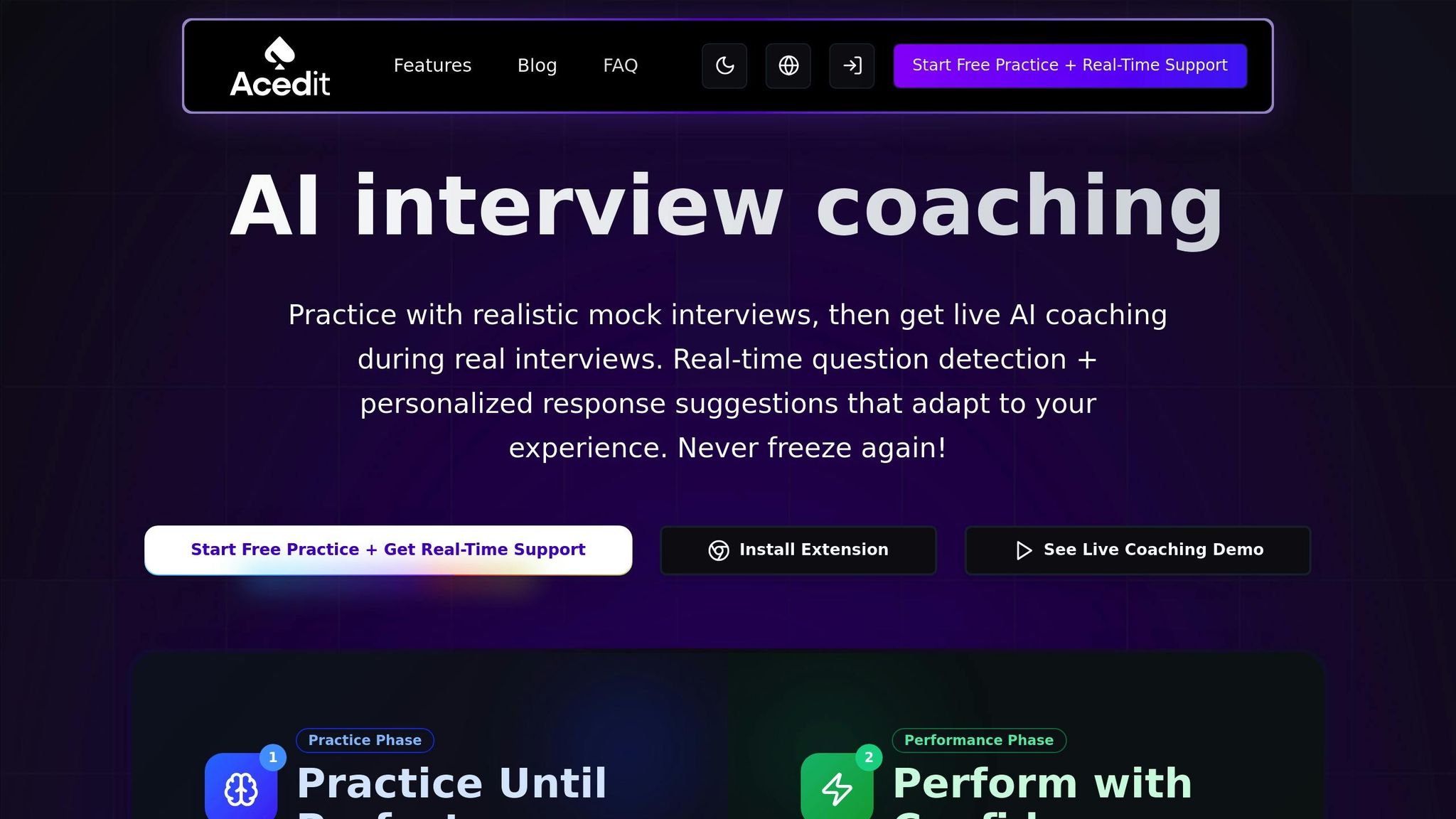
Wenn es um Interviews geht, geht es Einstellungsmanagern um Risikominderung. Acedit hilft Ihnen, hervorzustechen, indem es Ihnen die Werkzeuge gibt, um Ihren Wert selbstbewusst zu demonstrieren. Diese KI-gestützte Chrome-Erweiterung bietet Echtzeit-Coaching, personalisierte Übungsfragen und Simulationen, um Ihnen zu helfen, sich vorbereitet und selbstsicher zu fühlen.
Echtzeit-Interview-Feedback erhalten
Acedit fungiert als Ihr hinter den Kulissen Coach während Live-Video-Interviews. Es erkennt Fragen in Echtzeit und bietet kontextabhängige Vorschläge für Ihre Antworten. Kompatibel mit großen browsergestützten Plattformen wie Zoom, Google Meet und Microsoft Teams, arbeitet Acedit diskret, sodass Interviewer nicht einmal wissen, dass es da ist [21].
Für diese kniffligen Verhaltungsfragen erstellt Acedit STAR (Situation, Task, Action, Result) Beispiele, die auf die Rolle zugeschnitten sind, die Sie anstreben. Dies stellt sicher, dass Ihre Antworten klar, ergebnisorientiert und relevant sind [21]. Durch die Integration mit Ihrem LinkedIn-Profil zieht es Details aus Ihrer Berufsgeschichte, um Ihnen zu helfen, Antworten zu liefern, die mit Ihrer Erfahrung übereinstimmen [21]. Mit seinem Fokus auf messbare, metrikgesteuerte Beispiele hilft Acedit, Einstellungsrisiken zu reduzieren, indem es Ihren Wert kristallklar macht [3]. Das Ergebnis? Prägnante, wirkungsvolle Antworten, die einen bleibenden Eindruck hinterlassen.
Benutzer haben einen Anstieg des Interviewvertrauens um 98% bei Verwendung von Acedit gemeldet [21]. Und dieses Vertrauen ist wichtig – Einstellungsmanager priorisieren oft Begeisterung und Energie über das einfache Auflisten vergangener Leistungen.
Generierung von benutzerdefinierten Fragen und Antworten
Acedits Fragendatenbank ist so konzipiert, dass sie sich an die Rolle anpasst, auf die Sie abzielen. Sie generiert Übungsfragen, die mit den Verantwortungen übereinstimmen, die Einstellungsmanager am meisten interessieren. Durch das Ziehen von LinkedIn-Daten erstellt das Tool personalisierte Antworten, die Ihre Leistungen hervorheben [21]. Diese Funktion ist besonders nützlich, wenn man bedenkt, dass 93% der Talentakquisitionsfachleute die Bedeutung einer genauen Bewertung der Fähigkeiten eines Kandidaten betonen, um die Einstellungsqualität zu verbessern [22].
Bisher hat Acedit über 15.000 Übungsfragen erleichtert [21]. Es erstellt auch STAR-Beispiele für Verhaltungsfragen und gibt Einstellungsmanagern genau das, was sie suchen. Darüber hinaus automatisiert Acedit die Erstellung von Anschreiben und stellt sicher, dass Ihre Bewerbung auf das Unternehmen zugeschnitten und mit seinen Werten übereinstimmt [21].
Üben mit Interview-Simulationen
Acedit hört nicht bei Live-Coaching und maßgeschneiderten Fragen auf. Es bietet auch realistische Interview-Simulationen, um Ihnen zu helfen, Ihre Lieferung zu verfeinern. Das Üben in einer simulierten Umgebung kann Ihre Nerven beruhigen und Ihr Vertrauen stärken [23] [24]. Diese Mock-Interviews ermöglichen es Ihnen, Ihre Antworten zu üben, Ihr Tempo zu verbessern und Ihre Körpersprache zu verfeinern [23].
Während dieser Simulationen können Sie üben, zwei oder drei wichtige "Erfolgsgeschichten" zu teilen, die Ihre Stärken hervorheben und zeigen, wie Sie Herausforderungen angegangen sind [23]. Mit über der Hälfte der Einstellungsmanager, die Kandidaten schätzen, die sich dem Lernen und Wachstum verpflichten [1], bieten diese Sitzungen eine großartige Gelegenheit, Beispiele vorzubereiten – wie aktuelle Kurse oder Zertifikate – die Ihren Antrieb zur Verbesserung zeigen. Career Coach Janet Civitelli, Ph.D., fasst es gut zusammen:
"Der Arbeitgeber kann Fähigkeiten lehren, aber die Einstellung ist sehr schwer zu ändern" [24].
Acedit bietet flexible Preisoptionen, einschließlich einer einmaligen Zahlung für lebenslangen Zugriff [21].
Fazit
Einstellungsmanager stehen unter enormem Druck – 88% von ihnen berichten, dass sie Druck verspüren, schnell und effektiv die richtigen Einstellungen zu treffen [2]. Sie suchen nicht nur nach jemandem, um eine Rolle zu besetzen; sie wollen Kandidaten, die Risiken minimieren können, indem sie messbare Ergebnisse liefern und gut mit den Unternehmenswerten und Teamdynamiken übereinstimmen. Das Verständnis dieser Prioritäten gibt Ihnen einen echten Vorteil im Einstellungsprozess.
Hier sind einige wichtige Strategien, die Sie im Hinterkopf behalten sollten:
- Schnell antworten: Streben Sie danach, innerhalb von 24 Stunden auf Anfragen zu antworten [1].
- Zeigen Sie Ihre Auswirkung: Quantifizieren Sie Ihre Leistungen mit spezifischen Metriken, die Ihren Wert hervorheben.
- Hören Sie nie auf zu lernen: Über die Hälfte der Einstellungsmanager (50%) priorisieren Kandidaten, die kontinuierliche Bemühungen zur Weiterqualifizierung demonstrieren [1].
Interessanterweise kann Begeisterung und eine proaktive Einstellung oft mangelnde direkte Branchenerfahrung überwiegen.
In der heutigen Einstellungslandschaft, wo 53% der Entscheidungsträger KI-Tools zur Screening von Kandidaten nutzen [25], ist es wichtiger denn je, Ihre Persönlichkeit scheinen zu lassen. Sich ausschließlich auf KI-generierte Inhalte zu verlassen, kann die einzigartigen Qualitäten entfernen, die Sie abheben [26].
Wenn Sie zusätzliche Unterstützung suchen, bietet Acedit Tools wie Echtzeit-Coaching, personalisierte Übungsfragen und Interview-Simulationen, die Ihnen helfen, Ihre STAR-Beispiele selbstbewusst zu kommunizieren und Ihre Interviews zu meistern [2][21].
Letztendlich ist die Gewinnformel klar: Konzentrieren Sie sich auf messbare Ergebnisse, betonen Sie kulturelle Ausrichtung und kommunizieren Sie authentisch. Auf diese Weise positionieren Sie sich als die risikoarme, hochwertige Kandidat, die Einstellungsmanager begeistert an Bord nehmen möchten.
FAQs
Wie kann ich Einstellungsmanagern zeigen, dass ich eine Wachstumsmentalität habe?
Um eine Wachstumsmentalität zu zeigen, heben Sie Ihre Fähigkeit hervor, zu lernen, sich anzupassen und zu verbessern. Verwenden Sie spezifische Beispiele in Interviews oder auf Ihrem Lebenslauf, um zu zeigen, wie Sie Herausforderungen gemeistert, neue Fähigkeiten erworben und messbare Ergebnisse geliefert haben. Reflektieren Sie darüber, was diese Erfahrungen Sie gelehrt haben, und erklären Sie, wie Sie diese Lektionen in der Rolle nutzen werden, die Sie anstreben.
Demonstrieren Sie Ihr Engagement für kontinuierliches Lernen, indem Sie aktuelle Kurse, Zertifikate oder Fähigkeiten erwähnen, die Sie entwickelt haben, besonders solche, die mit dem Job übereinstimmen. Verbinden Sie diese Bemühungen mit den Zielen des Unternehmens, um zu zeigen, dass Sie proaktiv und zukunftsorientiert sind. Fragen Sie während Interviews nach den zukünftigen Anforderungen des Teams oder aufstrebenden Fähigkeiten und teilen Sie mit, wie Sie sich auf diese Anforderungen vorbereiten.
Für zusätzliche Vorbereitung können Tools wie Acedit Ihnen helfen, Ihre Geschichten zu polieren, Interviewfragen zu üben und Ihre Lernfähigkeit zu zeigen. Dieser Ansatz kommuniziert Neugier, Widerstandsfähigkeit und eine "Ich-kann-es"-Einstellung – Qualitäten, die Einstellungsmanager in Kandidaten suchen, die mit ihrer Organisation wachsen können.
Wie kann ich zeigen, dass ich mit der Unternehmenskultur übereinstimme?
Um sich selbst mit den Werten und der Arbeitsumgebung eines Unternehmens auszurichten, beginnen Sie mit gründlicher Recherche. Schauen Sie sich ihre Website an, durchsuchen Sie ihre Social-Media-Kanäle und lesen Sie aktuelle Nachrichten über sie. Dies gibt Ihnen ein klares Bild ihrer Mission, Kernwerte und wie es ist, dort zu arbeiten. Nutzen Sie das, was Sie lernen, um Ihre Interviewantworten zu gestalten. Wenn Teamarbeit zum Beispiel ein großes Thema für sie ist, teilen Sie eine Geschichte, in der Zusammenarbeit zum Erfolg führte. Wenn sie Innovation priorisieren, sprechen Sie über eine Zeit, in der Sie eine kreative Lösung entwickelt haben, die Auswirkungen hatte.
Es ist auch wichtig, echte Begeisterung für die Mission des Unternehmens zu zeigen und zu erklären, warum die Rolle Sie reizt, über das Gehalt hinaus. Einstellungsmanager werden natürlich zu Kandidaten hingezogen, die von der Arbeit selbst motiviert sind. Stellen Sie während des Interviews durchdachte Fragen wie: "Wie feiert das Team Erfolge?" oder "Welche Möglichkeiten gibt es für Mitarbeiter, neue Ideen einzubringen?" Diese Fragen zeigen nicht nur, dass Sie wirklich interessiert sind, sondern auch, dass Sie bereits darüber nachdenken, wie Sie beitragen und in ihrer Kultur gedeihen können.
Warum schätzen Einstellungsmanager Begeisterung mehr als Erfahrung?
Einstellungsmanager schätzen Begeisterung, weil sie den Antrieb, die Bereitschaft zu lernen und die Bereitschaft eines Kandidaten zeigt, Herausforderungen anzugehen – Merkmale, die oft zu dauerhaftem Erfolg führen. Während Erfahrung wichtig ist, deutet Begeisterung oft auf eine proaktive Mentalität und einen echten Wunsch hin, einen positiven Einfluss auf das Team zu haben.
Ein begeisterter Kandidat wird oft als jemand angesehen, der wahrscheinlicher wächst, sich anpasst und Herausforderungen annimmt, was ihn zu einer stärkeren langfristigen Passung macht im Vergleich zu jemandem, der möglicherweise Erfahrung hat, aber Energie oder Motivation fehlt. Schließlich können Fähigkeiten normalerweise gelehrt werden, aber die richtige Einstellung zu fördern ist eine viel schwierigere Aufgabe.