
Las preguntas de comportamiento ayudan a los empleadores a evaluar cómo has manejado situaciones pasadas para predecir tu desempeño futuro. Para responder de manera efectiva, necesitas una estrategia clara. Aquí hay un desglose rápido de los cinco pasos cubiertos en el artículo:
- Identifica Palabras Clave y Frases Desencadenantes: Presta atención a palabras como "conflicto", "plazo" o "trabajo en equipo" para entender la habilidad que se está evaluando.
- Vincula Palabras Clave a Habilidades Específicas: Relaciona el enfoque de la pregunta con habilidades centrales como comunicación, liderazgo o resolución de problemas.
- Usa el Método STAR: Estructura tu respuesta con Situación, Tarea, Acción y Resultado para mayor claridad.
- Comprende el Propósito de la Pregunta: Determina qué intenta aprender el entrevistador sobre ti, como resiliencia o colaboración.
- Prepara Ejemplos Relevantes: Ten 3–5 historias detalladas listas que destaquen tus habilidades y logros.
Estos pasos simplifican cómo abordar cualquier pregunta de comportamiento, asegurando que tus respuestas estén bien organizadas y alineadas con los requisitos del trabajo.
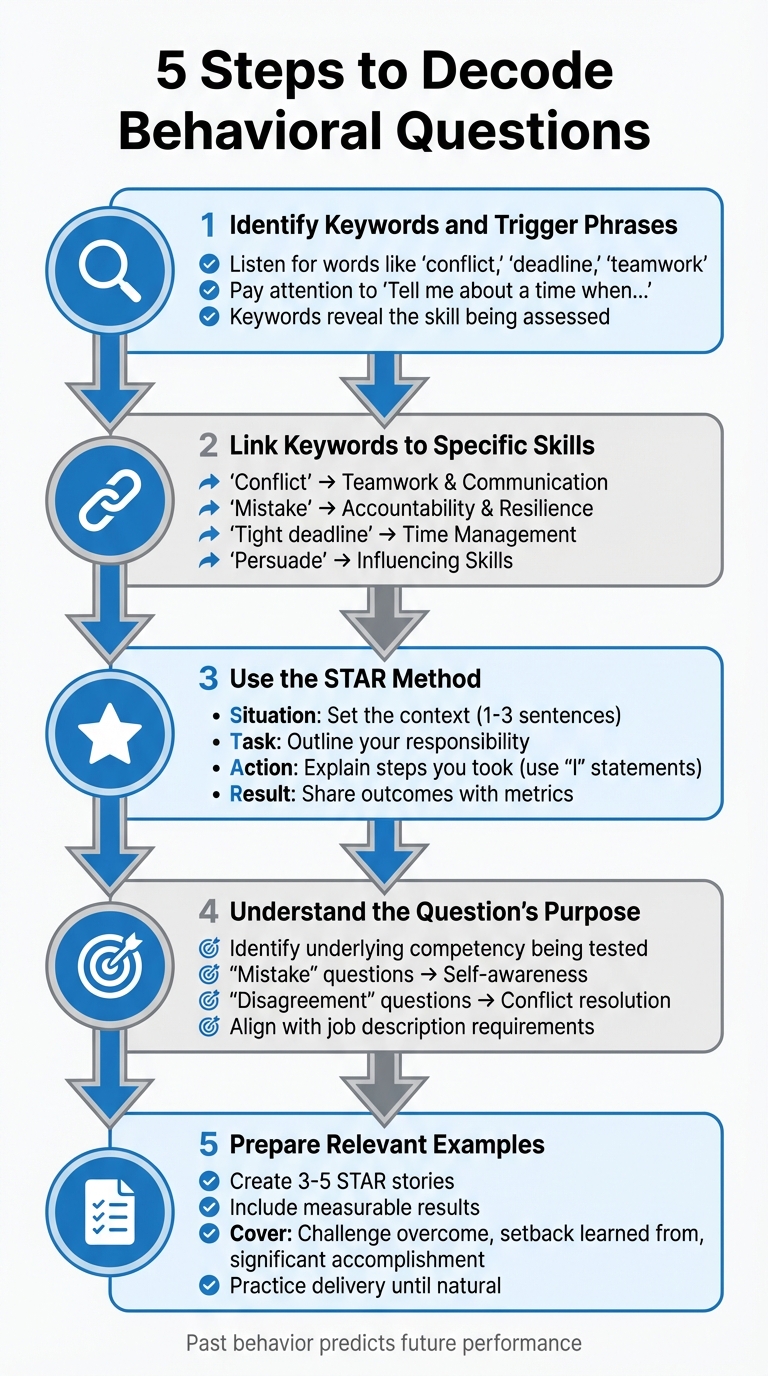
Descifrando la Entrevista: Elaborando Respuestas para Preguntas de Comportamiento
Paso 1: Identifica Palabras Clave y Frases Desencadenantes
Al abordar preguntas de entrevista de comportamiento, lo primero que debes hacer es escuchar atentamente palabras específicas que sugieran la habilidad o competencia que se está evaluando. Estas palabras clave son como migas de pan, ayudándote a descubrir exactamente qué quiere aprender el entrevistador sobre ti. Palabras como "conflicto", "plazo ajustado" o "lideré un equipo" son elecciones deliberadas destinadas a descubrir cómo manejas ciertos escenarios laborales.
Presta mucha atención a frases como "Cuéntame sobre una vez cuando..." o "Dame un ejemplo de...". Las pistas reales están en las palabras que siguen. Por ejemplo, si la pregunta menciona un "conflicto con un compañero de trabajo", la palabra "conflicto" señala que el entrevistador está investigando tus habilidades de trabajo en equipo e interpersonales.
Identificando Indicadores de Competencia
Cada palabra clave en una pregunta de comportamiento apunta a una habilidad o rasgo específico. Por ejemplo, palabras como "error" o "fracaso" sugieren que el entrevistador está evaluando tu responsabilidad y resiliencia. Si escuchas "presión", "plazo ajustado" u "abrumador", probablemente están evaluando cómo manejas tu tiempo y el estrés. Términos relacionados con liderazgo como "liderar", "tomar la iniciativa", "motivar" o "delegar" indican que buscan evidencia de tu capacidad para tomar iniciativa y gestionar a otros.
Reconocer estos indicadores es clave para entender la intención detrás de la pregunta. También te ayuda a decidir qué aspectos de tu experiencia destacar. Por ejemplo, una pregunta sobre "cambio" o una "transición inesperada" requiere ejemplos que demuestren tu capacidad para adaptarte. De manera similar, términos como "persuadir" o "conversación difícil" son señales para mostrar tus habilidades de comunicación e influencia. Incluso si no estás en un rol gerencial, las palabras clave orientadas al liderazgo aparecen frecuentemente, ya que muchas empresas valoran a los empleados que pueden tomar responsabilidad e impulsar resultados.
Alinea Palabras Clave con Requisitos del Trabajo
La mejor manera de prepararse para preguntas de comportamiento es usar la descripción del trabajo como tu guía. Busca frases o términos repetidos que se enfaticen, como "toma iniciativa", "trabaja independientemente" o "colaborativo". Estas frases probablemente aparezcan como palabras clave en tus preguntas de entrevista.
"Escanea la descripción del trabajo en busca de cualquier cosa que parezca mencionarse más de una vez o que de otra manera se enfatice - digamos, 'toma iniciativa' o 'trabaja independientemente'. Luego crea algunas historias sobre esas cosas." - Lily Zhang, Consejera de Carrera, The Muse [5]
Antes de la entrevista, organiza los requisitos del trabajo en categorías como Trabajo en Equipo, Servicio al Cliente, Adaptabilidad, Gestión del Tiempo, Comunicación y Liderazgo. Luego, vincula las palabras clave que identifiques en las preguntas de la entrevista a estas categorías. Por ejemplo, si la descripción del trabajo destaca "colaboración entre funciones" y te preguntan sobre resolver un "desacuerdo", está claro que el entrevistador quiere entender cómo manejas el conflicto mientras mantienes relaciones laborales sólidas. Al vincular tus respuestas a los desafíos específicos del rol, puedes presentar ejemplos personalizados que demuestren tu idoneidad para el puesto.
Paso 2: Vincula Palabras Clave a Habilidades Específicas
Una vez que hayas identificado las palabras clave en una pregunta, el siguiente paso es conectarlas a las habilidades específicas que el entrevistador está evaluando. Cada palabra clave sirve como una pista, apuntando a las habilidades que les interesan. Por ejemplo, si aparece la palabra "conflicto", probablemente estén evaluando tus habilidades de trabajo en equipo y comunicación. De manera similar, las preguntas sobre "demandas competitivas" a menudo prueban tu capacidad para manejar múltiples responsabilidades mientras mantienes independencia.
Las preguntas de comportamiento actúan como una ventana a cómo trabajas. Como explica Johnson & Johnson, estas preguntas son "realmente una lente a través de la cual los empleadores esperan entender mejor tu estilo de trabajo y enfoque para resolver problemas" [2]. Por ejemplo, una pregunta sobre un "error" podría estar dirigida a descubrir tu autoconciencia y capacidad para aprender de los desafíos. Por otro lado, las preguntas sobre "plazos ajustados" están diseñadas para evaluar tus habilidades organizativas y capacidad para priorizar efectivamente.
Las palabras clave a menudo se alinean con competencias centrales. Si te preguntan cómo "persuadiste" a alguien o manejaste una "conversación difícil", esto apunta a habilidades de comunicación e influencia. Las preguntas sobre "identificar un problema" o encontrar una "mejor manera" de completar una tarea destacan tu iniciativa y mentalidad de resolución de problemas. Incluso frases como "no estuve de acuerdo con un gerente" brindan una oportunidad para mostrar tus habilidades interpersonales y adaptabilidad en situaciones complicadas.
Determina Qué Quiere el Empleador
Después de vincular palabras clave a habilidades amplias, llévalo un paso más allá personalizando tu enfoque al rol específico. Usa la descripción del trabajo como tu guía para mapear palabras clave a las habilidades exactas requeridas. Por ejemplo, si la posición enfatiza colaboración entre funciones, prepárate para palabras clave como "falta de comunicación", que podría probar cómo navegas el trabajo en equipo dentro de grupos diversos.
Alinea tu análisis de palabras clave con las demandas únicas del rol. Para roles de liderazgo, palabras clave como "delegar", "motivar" o "bajo desempeño" sugieren que el entrevistador está interesado en tu estilo de gestión y cómo abordas los desafíos del equipo. Mientras tanto, para roles remotos, frases como "mantenerse organizado" o referencias a herramientas de comunicación señalan la necesidad de autogestion y competencia técnica. Mencionar plataformas como Slack o Zoom puede destacar tu comodidad tanto con la tecnología como con la colaboración [6]. Una vez que hayas vinculado habilidades a palabras clave, estarás listo para elaborar respuestas convincentes usando el método STAR.
Paso 3: Estructura Respuestas Usando el Método STAR
Una vez que hayas relacionado palabras clave con las habilidades que busca un empleador, el siguiente paso es organizar tus respuestas de una manera que cuente una historia clara y convincente. El método STAR - Situación, Tarea, Acción, Resultado - ofrece un marco directo para hacer exactamente eso. Te ayuda a conectar los puntos entre tus experiencias y los requisitos del trabajo, haciendo que tus respuestas sean más impactantes durante las entrevistas. Jonathan Gordon, Experto en Desarrollo de Carrera en Management.org, lo expresa de esta manera:
"El método STAR es poderoso para responder preguntas de entrevista de comportamiento y ayuda a los candidatos a proporcionar respuestas claras, estructuradas y concisas. Asegura que tus respuestas destaquen habilidades y experiencias relevantes." [9]
Este método te permite guiar al entrevistador a través de una narrativa completa, comenzando con el contexto y terminando con los resultados de tus acciones. Aquí hay un desglose de cómo usar STAR efectivamente.
Comprende Cada Componente de STAR
Cada parte del marco STAR juega un papel específico en la formación de tu respuesta:
- Situación: Establece brevemente el escenario describiendo el desafío o contexto en 1–3 oraciones. Mantenlo enfocado y omite detalles innecesarios.
- Tarea: Describe tu responsabilidad o el objetivo hacia el que estabas trabajando.
- Acción: Explica los pasos que tomaste para abordar la situación, enfocándote en tus contribuciones personales. Usa declaraciones en primera persona para destacar tu rol.
- Resultado: Comparte el resultado de tus acciones, usando métricas específicas como porcentajes, cifras en dólares o tiempo ahorrado para aclarar tu impacto.
Eva Chan, Escritora Profesional de Currículum Certificada en Resume Genius, enfatiza:
"El método STAR te ayuda a formar respuestas específicas sobre tus experiencias laborales para que puedas demostrar que eres un candidato de primer nivel." [10]
Para prepararte, piensa en 5–7 historias STAR que muestren las habilidades clave mencionadas en la descripción del trabajo. Estas historias deben ser adaptables, permitiéndote ajustarlas según las preguntas que te hagan.
Enfatiza Resultados e Impacto
Una vez que hayas estructurado tu respuesta, cambia tu enfoque al Resultado - aquí es donde demuestras tu valor. Las entrevistas de comportamiento se basan en la idea de que el desempeño pasado predice el éxito futuro [11]. Para fortalecer tu caso, cuantifica tus resultados siempre que sea posible. Usa números, porcentajes u otros resultados medibles para mostrar claramente el impacto de tu trabajo.
Por ejemplo, un consultor de desarrollo de productos podría compartir cómo completó un proyecto antes de lo previsto y dentro del presupuesto, lo que resultó en una reducción del 20% en los costos de fabricación [11].
Si tu situación no se presta a números concretos, enfatiza las lecciones que aprendiste o el crecimiento profesional que lograste. Herramientas como Acedit pueden ayudarte a practicar la elaboración de respuestas STAR y proporcionar retroalimentación generada por IA. Según reportes de usuarios, esta herramienta ha aumentado la confianza en más del 55% [1].
Paso 4: Comprende el Propósito de la Pregunta
Una vez que hayas dominado el método STAR, el siguiente paso es descubrir qué está realmente buscando el entrevistador. Las preguntas de comportamiento no son solo sobre las historias que cuentas - están diseñadas para revelar cualidades específicas como resiliencia, trabajo en equipo, liderazgo o cómo abordas los desafíos. Como explica Johnson & Johnson:
"Aunque las preguntas de entrevista de comportamiento preguntan sobre comportamientos específicos, realmente son una lente a través de la cual los empleadores esperan entender mejor tu estilo de trabajo y enfoque para resolver problemas." [2]
Presta mucha atención a cómo se formulan las preguntas. Por ejemplo, si te preguntan sobre un error que has cometido, el entrevistador probablemente está evaluando tu responsabilidad y autoconciencia. Las preguntas sobre desacuerdos con compañeros de trabajo a menudo tienen como objetivo descubrir tus habilidades de resolución de conflictos y capacidad para colaborar. La Oficina de Estrategia de Carrera de Yale lo expresa de esta manera:
"Al preguntar sobre fortalezas y debilidades, los empleadores evalúan tu nivel de autoconciencia y tu evaluación honesta sobre dónde puedes mejorar." [7]
El truco es identificar la competencia subyacente que se está probando. Un consejero de carrera aconseja:
"Escanea la descripción del trabajo en busca de cualquier cosa que parezca mencionarse más de una vez o que de otra manera se enfatice." [5]
Al entender el propósito detrás de cada pregunta, puedes adaptar tus respuestas para alinearte con lo que el empleador valora más.
Aborda Requisitos Específicos del Trabajo
Hacer que tus respuestas sean relevantes para el rol es esencial. Por ejemplo, si estás entrevistándote para una posición orientada al cliente, enfócate en comunicación y servicio al cliente al interpretar la pregunta. En contraste, si el trabajo es un rol de gestión, destaca tus habilidades de liderazgo y cómo manejas la dinámica del equipo.
Conecta tus experiencias pasadas con las demandas específicas del trabajo. Por ejemplo, si te preguntan sobre gestionar prioridades competitivas para un rol de gestión de proyectos, describe cómo tus acciones abordaron directamente las responsabilidades descritas en la descripción del trabajo. Esto no solo muestra que entiendes el rol sino que también ayuda al entrevistador a imaginarte teniendo éxito en él.
Paso 5: Selecciona y Prepara Ejemplos Relevantes
Ahora que has analizado y estructurado tu enfoque, es hora de enfocarte en seleccionar ejemplos que realmente muestren tus fortalezas. Piénsalo como crear un "banco de historias" lleno de experiencias versátiles que puedas adaptar a diferentes preguntas de entrevista. La descripción del trabajo es tu arma secreta aquí - destaca lo que el empleador valora más e insinúa los tipos de preguntas que podrías enfrentar [3].
Apunta a preparar tres a cinco historias clave de tus experiencias pasadas - ya sea de trabajos, pasantías o trabajo voluntario. Estas deben cubrir una variedad de competencias. Como mínimo, ten ejemplos para estos tres escenarios: superar un desafío, aprender de un revés y lograr un logro significativo. Al adaptar los detalles de cada historia a la pregunta en cuestión, puedes usar una sola experiencia para abordar múltiples temas.
Usa Experiencias Laborales del Mundo Real
Enfócate en situaciones reales que muestren resultados medibles. Al revisar tu historial profesional, prioriza ejemplos que incluyan números o resultados específicos. Por ejemplo, en lugar de decir que mejoraste la eficiencia, explica cómo "redujiste el tiempo de finalización del proyecto en dos semanas" [3] [4]. Estos detalles concretos hacen que tus respuestas sean más convincentes y más fáciles de recordar.
Elige ejemplos que se alineen con las competencias centrales del trabajo. Robin Stenzel, Directora de Personas en Harver, enfatiza:
"Cada trabajo tiene un componente de liderazgo... Se espera que todos aprovechemos oportunidades de liderazgo, incluso como colaboradores individuales." [4]
Esto significa que incluso si no estás solicitando un rol de liderazgo, tener una historia que demuestre iniciativa o cualidades de liderazgo puede diferenciarte.
La Práctica Hace la Perfección
Una vez que hayas seleccionado tus ejemplos, el siguiente paso es practicar entregarlos. Ensayar te ayuda a refinar tus respuestas hasta que se sientan naturales. Herramientas como Acedit pueden ser increíblemente útiles aquí. Su función de preguntas y respuestas impulsada por IA genera preguntas personalizadas basadas en la descripción del trabajo, mientras que sus simulaciones de entrevista te permiten practicar respuestas estructuradas usando el método STAR. Estas simulaciones incluyen preguntas de seguimiento para probar tu adaptabilidad.
La retroalimentación de IA asegura que tus respuestas sean pulidas, claras y enfocadas en resultados. Incluso puede ayudarte a reutilizar una sola historia para destacar múltiples habilidades - por ejemplo, mostrando cómo un fracaso de proyecto demuestra tanto adaptabilidad como resolución de conflictos. Con este tipo de preparación, estarás listo para pausar, tomarte un momento y entregar respuestas que resuenen con lo que los entrevistadores están buscando.
Conclusión
Desglosar preguntas de comportamiento no tiene que ser complicado. Al identificar términos clave, conectarlos a habilidades cruciales, aplicar el método STAR, entender la perspectiva del entrevistador y preparar ejemplos específicos, puedes transformar desafíos potenciales en oportunidades. La idea central es sencilla: tu comportamiento pasado es el mejor indicador de tu desempeño futuro [8]. Cuando compartes cómo has navegado situaciones en el pasado, les estás dando a los empleadores un vistazo de cómo manejarás su rol.
Pero la preparación es el verdadero factor decisivo. Practicar tus respuestas en voz alta te ayuda a entregar respuestas que se sientan naturales y confiadas [2]. Y aquí es donde las herramientas modernas pueden marcar una gran diferencia.
Por ejemplo, Acedit ofrece preguntas de práctica generadas por IA y entrevistas simuladas para ayudarte a construir confianza genuina. Los usuarios han reportado una mejora del 55% en su desempeño de entrevista mientras perfeccionan su entrega [1]. De hecho, más de 2,143 profesionales han asegurado sus trabajos soñados con la ayuda de coaching impulsado por IA [1].
Aunque herramientas como estas son invaluables, la preparación consistente sigue siendo la base. Ya sea que uses el plan gratuito u optes por el plan Premium Plus a $75 para acceso ilimitado, la clave es mantener una rutina de práctica regular. Como compartió Michael Roberts:
"Los módulos de preparación me prepararon para cualquier escenario de entrevista. ¡Muy efectivo!" [1]
Preguntas Frecuentes
¿Cómo puedo identificar rápidamente habilidades clave en preguntas de entrevista de comportamiento?
Para identificar las habilidades clave detrás de una pregunta de entrevista de comportamiento, comienza por desglosarla en componentes más pequeños. Presta atención a verbos de acción como liderar, resolver o colaborar, así como sustantivos que sugieran habilidades específicas como trabajo en equipo o resolución de problemas. Estas palabras a menudo revelan lo que el entrevistador está buscando.
Luego, compara estos términos con la descripción del trabajo. Los empleadores frecuentemente usan lenguaje similar en publicaciones de trabajo y preguntas de entrevista, por lo que identificar palabras clave coincidentes puede ofrecer pistas valiosas. Para apoyo adicional, herramientas como Acedit pueden analizar preguntas al instante, destacar palabras clave críticas e incluso sugerir historias STAR (Situación, Tarea, Acción, Resultado) personalizadas a las habilidades requeridas.
Al enfocarte en términos clave, alinearlos con la descripción del trabajo y usar herramientas de IA cuando sea necesario, puedes elaborar respuestas claras y dirigidas que destaquen las cualidades que tu entrevistador quiere ver.
¿Qué es el método STAR y cómo puede ayudar con preguntas de entrevista de comportamiento?
El método STAR ofrece una manera directa de abordar preguntas de entrevista de comportamiento. Desglosa tu respuesta en cuatro partes: Situación (establece el contexto), Tarea (explica tu rol u objetivo), Acción (detalla los pasos que tomaste) y Resultado (comparte el resultado o logro). Esta estructura convierte indicaciones amplias como "Cuéntame sobre una vez..." en respuestas concisas y convincentes.
Al usar el método STAR, puedes mantenerte en el camino, omitir detalles innecesarios y enfatizar tus esfuerzos personales. También facilita que los entrevistadores conecten tus experiencias pasadas con las calificaciones que están buscando. Herramientas como Acedit, una extensión de Chrome impulsada por IA, pueden llevar tu preparación al siguiente nivel sugiriendo respuestas basadas en STAR en tiempo real, dándote la confianza para brillar en tus entrevistas.
¿Cómo puedo preparar efectivamente ejemplos para preguntas de entrevista de comportamiento?
Para elaborar ejemplos convincentes para entrevistas de comportamiento, comienza revisando cuidadosamente la descripción del trabajo. Identifica las habilidades y rasgos clave que el empleador valora, como liderazgo, resolución de problemas o trabajo en equipo. A continuación, reflexiona sobre tus experiencias - ya sea de trabajo, escuela, esfuerzos voluntarios o proyectos personales - que muestren estas habilidades. Usa el método STAR (Situación, Tarea, Acción, Resultado) para estructurar tus historias. Este enfoque ayuda a mantener tus ejemplos claros y destaca resultados medibles, como "aumenté las ventas en un 15%" o "reduje el tiempo de procesamiento de 3 horas a 45 minutos".
Una vez que hayas esbozado algunos ejemplos sólidos, practica entregarlos en voz alta. Apunta a mantener tus respuestas concisas (alrededor de 1-2 minutos) y asegúrate de que enfaticen tus contribuciones específicas. Herramientas como Acedit pueden ser útiles para refinar tus respuestas, ofreciendo retroalimentación en tiempo real e incluso simulando entrevistas de práctica para aumentar tu confianza. La práctica regular no solo mejorará tu entrega sino que también te preparará para manejar preguntas de seguimiento sin problemas. Con la preparación adecuada, te sentirás listo para abordar cualquier pregunta de comportamiento que el entrevistador te lance.