
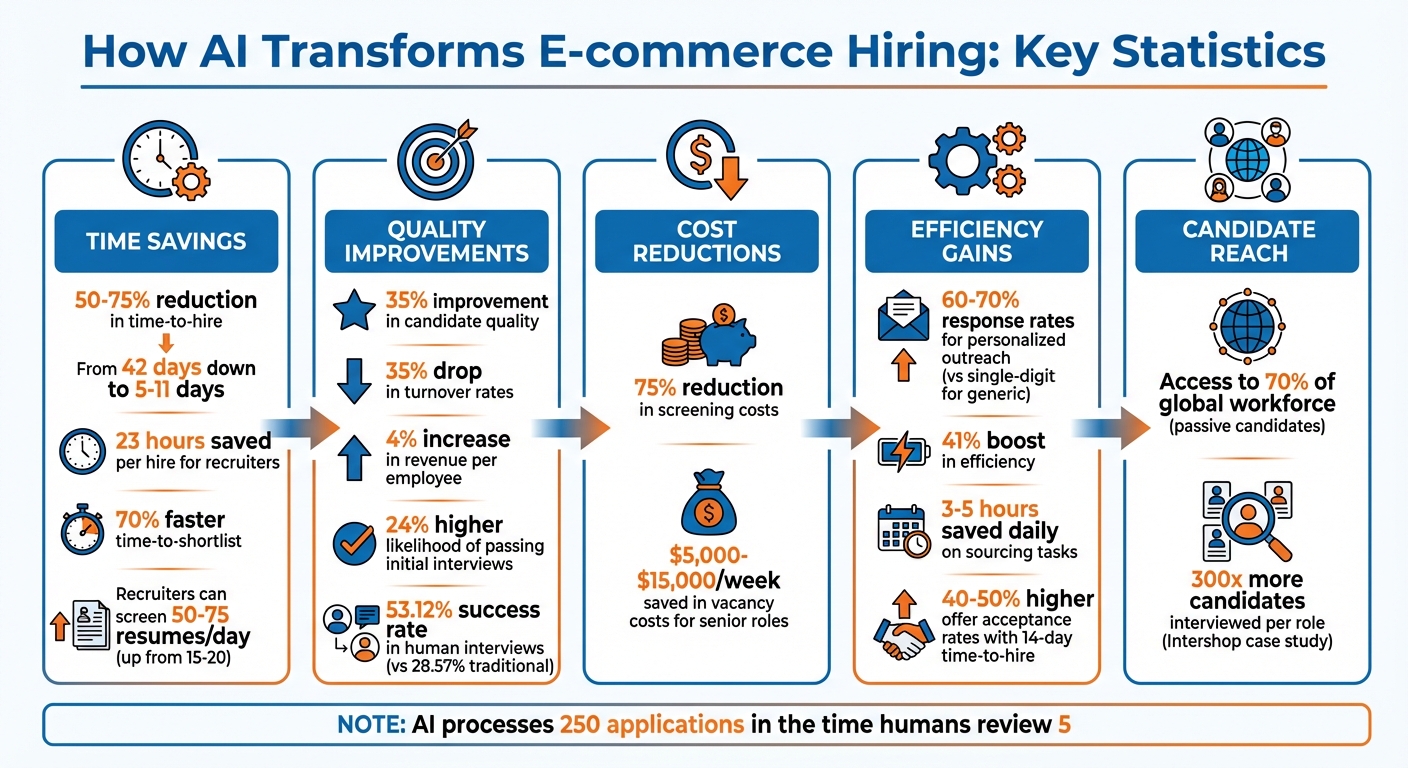
AI रिज्यूमे स्क्रीनिंग, शेड्यूलिंग, और उम्मीदवार सहभागिता और तैयारी जैसे कार्यों को स्वचालित करके ई-कॉमर्स भर्ती को बदल रहा है। यह विशेष रूप से पीक सीजन के दौरान महत्वपूर्ण है जब कंपनियों को भर्ती में वृद्धि और उच्च कर्मचारी कारोबार का सामना करना पड़ता है। मुख्य लाभों में शामिल हैं:
- तेजी से भर्ती: AI समय-से-भर्ती को 50–75% तक कम करता है, जिन प्रक्रियाओं में 42 दिन लगते थे उन्हें 5–11 दिनों तक कम करता है।
- बेहतर उम्मीदवार मिलान: AI कौशल, अनुभव, और नौकरी की प्रासंगिकता का मूल्यांकन करता है, भर्ती सफलता दर को 35% तक बढ़ाता है।
- कम लागत: स्वचालन भर्तीकर्ताओं को प्रति भर्ती 23 घंटे तक बचाता है और स्क्रीनिंग खर्च को 75% तक कम करता है।
- बेहतर दक्षता: AI उपकरण उच्च आवेदन मात्रा को संभालते हैं, शेड्यूलिंग को स्वचालित करते हैं, और SMS और ईमेल के माध्यम से संचार में सुधार करते हैं।
उम्मीदवार सोर्सिंग और रिज्यूमे स्क्रीनिंग के लिए AI
स्वचालित उम्मीदवार सोर्सिंग
AI एक साथ कई प्लेटफॉर्म पर उम्मीदवारों की खोज को सरल बनाकर ई-कॉमर्स भर्तीकर्ताओं के लिए खेल को बदल रहा है। LinkedIn या Indeed को मैन्युअल रूप से देखने के बजाय, AI उपकरण प्राकृतिक भाषा प्रसंस्करण का उपयोग करके भारी काम को संभालते हैं। भर्तीकर्ता अब बस "B2B SaaS अनुभव के साथ वरिष्ठ विपणन प्रबंधक" जैसी क्वेरी टाइप कर सकते हैं, और सिस्टम काम करने लगता है [3]।
यहाँ बात यह है: वैश्विक कार्यबल का लगभग 70% सक्रिय रूप से नौकरी की तलाश नहीं कर रहा है लेकिन सही अवसर के लिए खुला हो सकता है [3]। पारंपरिक नौकरी पोस्टिंग केवल प्रतिभा पूल के लगभग 25% तक पहुंचते हैं। AI स्क्रिप्ट को पलट देता है पेशेवर नेटवर्क, GitHub जैसे प्लेटफॉर्म, और यहां तक कि आंतरिक आवेदक ट्रैकिंग सिस्टम में लाखों प्रोफाइल को स्कैन करके। इसका मतलब है कि भर्तीकर्ता पिछले भर्ती चक्रों से मजबूत उम्मीदवारों के साथ फिर से जुड़ सकते हैं जबकि निष्क्रिय प्रतिभा को भी उजागर कर सकते हैं [3] [2]। यह एक व्यापक नेट डालने के लिए जीत-जीत है।
"प्रौद्योगिकी एक उपकरण है। निर्णय अंतर है। जो टीमें AI सोर्सिंग को अपनी रणनीतिक क्षमताओं में निवेश करते हुए अपनाती हैं, वे जो अकेले एक या दूसरे को करती हैं उनसे लगातार बेहतर प्रदर्शन करेंगी।" - Korn Ferry Research [3]
एक बार जब AI संभावित उम्मीदवारों की पहचान कर लेता है, तो यह व्यक्तिगतकरण को अगले स्तर पर ले जाता है। स्वचालित SMS और ईमेल आउटरीच को प्रत्येक उम्मीदवार के लिए अनुकूलित किया जा सकता है, विशिष्ट कैरियर विवरण का संदर्भ देते हुए। यह लक्षित दृष्टिकोण अक्सर 60–70% की प्रतिक्रिया दर प्राप्त करता है, जो सामान्य संदेशों की विशिष्ट एकल-अंक दरों से एक बड़ी छलांग है [3] [2]। इसके अलावा, AI सोर्सिंग उपकरण भर्तीकर्ताओं को दैनिक तीन से पांच घंटे बचा सकते हैं, दक्षता को 41% तक बढ़ा सकते हैं। यह ई-कॉमर्स में आम मौसमी भर्ती जल्दबाजी के दौरान विशेष रूप से मूल्यवान है [3]।
सोर्सिंग के बाद, अगला कदम रिज्यूमे समीक्षा को सुव्यवस्थित करना है - और AI वहां भी नेतृत्व करता है। उम्मीदवार इन स्वचालित चरणों के लिए AI के साथ साक्षात्कार का अभ्यास करके अपने प्रदर्शन में सुधार कर सकते हैं।
AI के साथ रिज्यूमे स्क्रीनिंग
AI केवल रिज्यूमे नहीं पढ़ता; यह उनका विश्लेषण करता है। डेटा को पार्स और सामान्य करके, ये सिस्टम उम्मीदवारों को नौकरी की आवश्यकताओं से मेल खाते हैं, उन्हें रैंक करते हैं, संभावित पूर्वाग्रहों को चिह्नित करते हैं, और शॉर्टलिस्ट बनाते हैं [6] [7]। पारंपरिक कीवर्ड खोज के विपरीत, आधुनिक AI एक उम्मीदवार के अनुभव के पीछे के संदर्भ को समझने के लिए सिमेंटिक मिलान का उपयोग करता है। इसका मतलब है कि यह योग्य व्यक्तियों को स्पॉट कर सकता है भले ही वे अपने कौशल को गैर-मानक तरीके से वर्णित करें [4] [5]।
समय की बचत प्रभावशाली है। जबकि एक मानव भर्तीकर्ता उसी समय में पांच आवेदनों की समीक्षा कर सकता है जो AI को 250 को संसाधित करने में लगता है, प्रौद्योगिकी शॉर्टलिस्ट करने का समय 70% तक कम करती है। भर्तीकर्ता प्रति दिन 15–20 रिज्यूमे स्क्रीनिंग से 50–75 तक जा सकते हैं, उत्पादकता में काफी वृद्धि कर सकते हैं [6]। ई-कॉमर्स भूमिकाओं के लिए, जो अक्सर प्रमुख अभियानों के दौरान भर्ती में वृद्धि का अनुभव करते हैं, AI उच्च मात्रा को कुशलतापूर्वक संभालने के लिए 24/7 समर्थन प्रदान करता है [4]।
AI कई कारकों में उम्मीदवारों का मूल्यांकन भी करता है, तकनीकी कौशल (30–35%), अनुभव प्रासंगिकता (25–30%), कैरियर प्रक्षेपवक्र (15–20%), शिक्षा (10–15%), और अतिरिक्त योग्यताओं (5–10%) को वजन देता है [6]। उच्च-गुणवत्ता वाली प्रणालियों को अलग करने वाली बात उनकी पारदर्शिता है। वे प्राकृतिक-भाषा सारांश प्रदान करते हैं जो समझाते हैं कि एक उम्मीदवार को एक निश्चित तरीके से क्यों रैंक किया गया था, भर्तीकर्ताओं को निर्णय लेने की प्रक्रिया का स्पष्ट दृश्य देते हैं [5] [7]। स्क्रीनिंग के लिए AI का उपयोग करने वाली कंपनियां उम्मीदवार की गुणवत्ता में 35% सुधार की रिपोर्ट करती हैं, जिसे भर्ती प्रबंधक संतुष्टि और 90-दिन की प्रतिधारण दरों द्वारा मापा जाता है [6]।
sbb-itb-20a3bee
बेहतर उम्मीदवार मिलान और प्री-इंटरव्यू वर्कफ़्लो
AI-संचालित उम्मीदवार मिलान
AI ने भर्ती प्रक्रिया को बदल दिया है, बुनियादी कीवर्ड खोज से परे जा रहा है। आज की प्रणालियां कौशल ग्राफ पर निर्भर करती हैं जो भूमिकाओं में एक उम्मीदवार की क्षमताओं का मूल्यांकन करते हैं, हस्तांतरणीय कौशल और कैरियर पथ की पहचान करते हैं जो पारंपरिक फिल्टर अक्सर अनदेखा करते हैं [9]। सटीक कीवर्ड मेल पर केवल ध्यान केंद्रित करने के बजाय, ये एल्गोरिदम कौशल प्रासंगिकता, अनुभव की हाल की स्थिति, वरिष्ठता, और उद्योग संदर्भ जैसे कारकों का मूल्यांकन करते हैं यह निर्धारित करने के लिए कि एक उम्मीदवार एक भूमिका के लिए कितना अच्छा फिट है [9]। यह दृष्टिकोण मूल्यांकन को मानकीकृत करता है, मैन्युअल स्क्रीनिंग के साथ आने वाली व्यक्तिपरकता को कम करता है [1]।
उदाहरण के लिए, AI सिस्टम पुराने अनुभव पर पिछले वर्ष में उपयोग किए गए कौशल को प्राथमिकता देते हैं और उस अनुभव की गहराई पर विचार करते हैं - जैसे बड़ी टीमों का प्रबंधन या महत्वपूर्ण बजट को संभालना [9]। एक वास्तविक दुनिया का उदाहरण Amazon की Talent Acquisition Science टीम है, जिसने जनवरी 2026 में मशीन लर्निंग-आधारित मिलान की शुरुआत की। उनकी प्रणाली ने उम्मीदवारों के प्रारंभिक साक्षात्कार दौर पास करने की संभावना को 24% तक बढ़ाया [11]।
"उम्मीदवार मिलान एल्गोरिदम को नाजुक, कीवर्ड-नेतृत्व वाले फिल्टर से क्षमता-नेतृत्व वाली, न्यायसंगत, व्याख्यायोग्य रैंकिंग में विकसित होना चाहिए जो सीधे आपके ATS और वर्कफ़्लो के साथ एकीकृत हो।"
– Ameya Deshmukh [9]
ये सिस्टम "Matched 5/6 core skills; recent SOC2 work" जैसी प्राकृतिक-भाषा व्याख्याएं प्रदान करके पारदर्शिता भी प्रदान करते हैं, भर्ती प्रबंधकों को यह समझने में मदद करते हैं कि एक उम्मीदवार को उच्च स्कोर क्यों दिया गया [9][13]। कई सिस्टम प्रक्रिया को सुव्यवस्थित करने के लिए आत्मविश्वास थ्रेसहोल्ड का उपयोग करते हैं: "Strong" मेल स्वचालित रूप से साक्षात्कार आमंत्रण प्राप्त कर सकते हैं, जबकि "Potential" मेल को न्यायसंगतता सुनिश्चित करने के लिए आगे की मानव समीक्षा के लिए चिह्नित किया जाता है [9]। मिलान से परे, AI प्री-इंटरव्यू वर्कफ़्लो को सरल बनाता है, प्रक्रिया को और भी अधिक कुशल बनाता है।
प्री-इंटरव्यू कार्यों को स्वचालित करना
साक्षात्कार को मैन्युअल रूप से शेड्यूल करना प्रति उम्मीदवार 30 से 120 मिनट तक ले सकता है [12]। AI शेड्यूलिंग उपकरण कैलेंडर समन्वय, साक्षात्कार पैनल सेट अप करना, वीडियो लिंक बनाना, और अनुस्मारक भेजने जैसे कार्यों को स्वचालित करके इस बाधा को समाप्त करते हैं। 1,000 से अधिक कर्मचारियों वाली कंपनियों के लिए - जहां भरने का औसत समय 43 दिन है - यह स्वचालन भर्ती को काफी तेज कर सकता है [10]।
एक बेहतरीन उदाहरण Intershop से आता है, एक ई-कॉमर्स प्लेटफॉर्म, जिसने मार्च 2026 में एक तकनीकी भर्ती वृद्धि के दौरान एक AI-संचालित मॉक साक्षात्कार प्रणाली को अपनाया। भर्ती प्रबंधक Trent Lawson ने अपने दैनिक स्क्रीनिंग समय को तीन घंटे से 10 मिनट से कम करने की सूचना दी। इसने कंपनी को प्रति भूमिका 300 गुना अधिक उम्मीदवारों का साक्षात्कार लेने और एक साथ तीन भूमिकाओं को प्रबंधित करने की अनुमति दी, उम्मीदवारों ने प्रक्रिया को 5 में से 4.6 की संतुष्टि स्कोर दी [14][15]।
"इस उपकरण ने हमें अधिक संभावित उम्मीदवारों पर विचार करने की क्षमता को नाटकीय रूप से विस्तारित करने में सक्षम किया, जिससे एक समय में केवल एक भूमिका को प्रबंधित करने से एक साथ तीन भूमिकाओं को संभालने में बदलाव हुआ।"
– Trent Lawson, Hiring Manager, Intershop [14]
AI अन्य लॉजिस्टिक कार्यों को भी सरल बनाता है, जैसे पूर्वनिर्धारित मानदंड के आधार पर साक्षात्कार पैनल को इकट्ठा करना, समय क्षेत्र में शेड्यूल को सिंक करना, और स्कोरिंग रूब्रिक्स के साथ अनुकूलित साक्षात्कार किट वितरित करना। SMS और ईमेल के माध्यम से स्वचालित अनुस्मारक नो-शो को कम करने में मदद करते हैं, और सभी अपडेट रीयल-टाइम में आवेदक ट्रैकिंग सिस्टम में सिंक होते हैं। स्वचालन का यह स्तर उच्च-मात्रा भर्ती अवधि के दौरान विशेष रूप से मूल्यवान है, देरी को रोकता है और प्रक्रिया को सुचारू रूप से चलाता है [1]।
बेहतर भर्ती निर्णय लेने के लिए डेटा का उपयोग करना
भर्ती के लिए भविष्यसूचक विश्लेषण
AI भविष्यसूचक विश्लेषण के माध्यम से डेटा को भविष्यवाणियों में बदलकर भर्ती प्रक्रिया को फिर से आकार दे रहा है जो ई-कॉमर्स टीमों को सर्वश्रेष्ठ उम्मीदवारों पर ध्यान केंद्रित करने में मदद करता है। व्यक्तिपरक निर्णय पर निर्भर करने के बजाय, भविष्यसूचक विश्लेषण एक Candidate Fit Score (0 से 100 तक) निर्दिष्ट करता है। यह स्कोर पिछली भर्तियों से पैटर्न पर आधारित है, कौशल संरेखण, प्रासंगिक अनुभव, मूल्यांकन परिणाम, और संरचित साक्षात्कार रेटिंग जैसे कारकों को मिश्रित करता है। लक्ष्य? यह भविष्यवाणी करना कि कौन से उम्मीदवार लंबे समय में सफल होने की संभावना रखते हैं [16]। इस तरह की अंतर्दृष्टि पहले चर्चा की गई मौसमी भर्ती वृद्धि के दौरान विशेष रूप से उपयोगी हो जाती है।
"भर्ती के लिए भविष्यसूचक विश्लेषण ऐतिहासिक और वास्तविक समय प्रतिभा डेटा का उपयोग करके भर्ती परिणामों की भविष्यवाणी करता है - जैसे उम्मीदवार फिट, भरने का समय, पाइपलाइन कवरेज, और प्रतिधारण जोखिम - ताकि टीमें सही उम्मीदवारों और कार्यों को प्राथमिकता दे सकें।"
– Ameya Deshmukh, EverWorker [16]
AI समान भूमिकाओं के लिए ऐतिहासिक प्रवृत्तियों, भर्तीकर्ता कार्यभार, और भर्ती प्रबंधक प्रतिक्रिया समय का विश्लेषण करके भरने का समय भी भविष्यवाणी करता है [16]। यदि पाइपलाइन कवरेज अपेक्षित स्तर से नीचे गिरता है, तो AI सिस्टम स्वचालित रूप से कर्मचारी की कमी से बचने के लिए सोर्सिंग अभियान शुरू कर सकते हैं [16][1]। इसके अलावा, एक सुझाया गया Quality of Hire (QoH) सूचकांक कई कारकों को तौलता है: 12-महीने की प्रतिधारण के आधार पर 40%, समय-से-रैंप लक्ष्यों पर 30%, और 90 दिनों के बाद प्रबंधक रेटिंग पर 30% [16]। ये उपकरण न केवल भर्ती को सुव्यवस्थित करते हैं बल्कि भर्ती प्रथाओं में सुधार के लिए मापने योग्य बेंचमार्क भी स्थापित करते हैं।
AI के साथ भर्ती प्रदर्शन को मापना
भविष्यवाणियों से परे, AI भर्ती रणनीतियों को परिष्कृत करने के लिए मुख्य मेट्रिक्स को ट्रैक करने में मदद करता है। उदाहरण के लिए, Quality of Hire प्रतिधारण दर, रैंप-अप समय, और प्रबंधक प्रतिक्रिया का मूल्यांकन करता है यह आकलन करने के लिए कि कौन सी भर्तियां उत्पादक कर्मचारियों में बदल जाती हैं [16]। भरने का समय मेट्रिक्स भर्ती प्रक्रिया में देरी को इंगित करते हैं, उच्च-मांग अवधि के दौरान रिक्ति लागत को कम करने में मदद करते हैं [16]। इस बीच, पाइपलाइन कवरेज अनुपात यह सुनिश्चित करते हैं कि हर चरण में पर्याप्त योग्य उम्मीदवार हैं, अंतिम-मिनट की भर्ती दबाव को कम करते हैं [16]।
AI केवल स्कोर प्रदान नहीं करता - यह संदर्भ प्रदान करता है। उदाहरण के लिए, एक भर्तीकर्ता "must-have कौशल पर 80% मेल" जैसी व्याख्या देख सकता है, जो सिस्टम की सिफारिशों में आत्मविश्वास बनाता है [16]। हालांकि, भविष्यसूचक मॉडल को नियमित निरीक्षण की आवश्यकता है। अध्ययनों से पता चला है कि सफेद-सुनने वाले नामों वाले समान रिज्यूमे को काले-सुनने वाले नामों वाले लोगों की तुलना में लगभग 50% अधिक कॉलबैक मिलते हैं [8]। इसे संबोधित करने के लिए, AI सिस्टम को अनपेक्षित पूर्वाग्रह की जांच के लिए मासिक ऑडिट से गुजरना चाहिए, सभी उम्मीदवारों के लिए निष्पक्ष व्यवहार सुनिश्चित करना चाहिए [8]। डेटा संग्रह को मानकीकृत करना, जैसे सुसंगत रेटिंग स्केल और प्रत्येक भर्ती चरण के लिए टाइमस्टैम्प का उपयोग करना, यह सुनिश्चित करता है कि AI के पास अपनी भविष्यवाणियों को परिष्कृत करने के लिए स्वच्छ, विश्वसनीय डेटा है [16]।
नौकरी की पेशकश निर्माण को स्वचालित करना
AI के साथ नौकरी की पेशकश बनाना
AI उपकरण वास्तविक समय वेतन बेंचमार्क और उम्मीदवार-विशिष्ट डेटा का उपयोग करके नौकरी की पेशकश प्रक्रिया को सरल बनाते हैं जो बाजार के रुझानों और कंपनी नीतियों के साथ संरेखित होते हैं [19][20]। स्थिर टेम्पलेट के विपरीत, ये सिस्टम नवीनतम मुआवजे प्रवृत्तियों के आधार पर गतिशील रूप से पेशकश को समायोजित करते हैं।
नियमों के साथ अनुपालन सुनिश्चित करने के लिए, AI सिस्टम एक स्तरीय जोखिम अनुमोदन प्रक्रिया का उपयोग करते हैं। दिनचर्या के कार्य, जैसे स्थिति अपडेट, स्वचालित रूप से संभाले जाते हैं, जबकि अधिक संवेदनशील कार्य - जैसे वेतन या इक्विटी विवरण को अंतिम रूप देना - भेजने से पहले मानव अनुमोदन की आवश्यकता होती है [21]। यह "human-in-the-loop" दृष्टिकोण AI को दोहराए जाने वाले कार्यों को प्रबंधित करने की अनुमति देता है जबकि भर्तीकर्ता सटीकता और कंपनी मूल्यों के साथ संरेखण बनाए रखने पर ध्यान केंद्रित करते हैं। EverWorker से Ameya Deshmukh समझाते हैं:
"जोखिम-स्तरीय अनुमोदन का उपयोग करें: कम-जोखिम कार्य (स्थिति अपडेट) स्वायत्त रूप से चलते हैं; मध्यम-जोखिम (पहली-दौर शॉर्टलिस्ट) को भर्तीकर्ता समीक्षा की आवश्यकता है; उच्च-जोखिम (पेशकश की शर्तें) को मानव अनुमोदन की आवश्यकता है।" [21]
AI-जनित नौकरी की पेशकश में वेतन पारदर्शिता प्रकटीकरण, इच्छा पर रोजगार खंड, और पृष्ठभूमि जांच या संदर्भ सत्यापन के लिए आकस्मिकता कथन जैसे आवश्यक अनुपालन तत्व शामिल हैं [23]। ये सिस्टम निर्णय लेने के विवरण को भी लॉग करते हैं ऑडिट ट्रेल बनाने के लिए, यह सुनिश्चित करते हुए कि निर्णय नौकरी से संबंधित और गैर-भेदभावपूर्ण हैं [22]। यह दस्तावेज़ीकरण न केवल नियामक समीक्षा का समर्थन करता है बल्कि भर्ती प्रक्रिया में पारदर्शिता को भी बढ़ावा देता है। प्रक्रिया के अधिकांश को स्वचालित करके, कंपनियां उम्मीदवार सोर्सिंग से अनुकूलित पेशकश प्रस्तुत करने तक निर्बाध रूप से संक्रमण कर सकती हैं।
पेशकश वितरण और ट्रैकिंग
एक बार नौकरी की पेशकश बन जाने के बाद, AI सिस्टम ईमेल, SMS, या चैटबॉट के माध्यम से उनके वितरण को संभालते हैं, यह सुनिश्चित करते हुए कि उम्मीदवार अपने पसंदीदा प्लेटफॉर्म पर सूचनाएं प्राप्त करते हैं [21][22]। प्रतिक्रियाएं वास्तविक समय में ट्रैक की जाती हैं, अपडेट स्वचालित रूप से आवेदक ट्रैकिंग सिस्टम (ATS) में परिलक्षित होते हैं, देरी को कम करते हैं [21]।
उम्मीदवार ghosting को संबोधित करने के लिए, AI व्यक्तिगत अनुवर्ती और अनुस्मारक भेजता है जो अगले कदमों की रूपरेखा देते हैं [21][22]। ये स्वचालित टचपॉइंट सहभागिता बनाए रखने और भर्ती प्रक्रिया को ट्रैक पर रखने में मदद करते हैं। EverWorker से Christopher Good इस परिचालन लाभ पर जोर देते हैं:
"AI Workers आपके ATS, मैसेजिंग, और कैलेंडर में परिणामों के मालिक होकर गणित को बदलते हैं - 24/7। वे... हर कदम के लिए तर्क के साथ आपके ATS को स्वच्छ रखते हैं।" [22]
AI चैटबॉट भी 24/7 समर्थन प्रदान करते हैं, सामान्य व्यावसायिक घंटों के बाहर लाभ, शुरुआत की तारीखें, या दूरस्थ कार्य विकल्पों के बारे में प्रश्नों का उत्तर देते हैं [18]। यह निरंतर उपलब्धता उम्मीदवार अनुभव में सुधार करती है और निर्णय लेने को तेज करती है। इसके अलावा, DocuSign या PandaDoc जैसे ई-हस्ताक्षर प्लेटफॉर्म के साथ एकीकरण हस्ताक्षरित पेशकशों की वास्तविक समय ट्रैकिंग को सक्षम करता है, भर्तीकर्ताओं को पेशकश स्वीकृति में तत्काल दृश्यमानता देता है [23]। ये सुव्यवस्थित प्रक्रियाएं व्यस्त भर्ती अवधि के दौरान विशेष रूप से मूल्यवान हैं, जैसे पीक ई-कॉमर्स सीजन, दक्षता और प्रतिक्रिया क्षमता सुनिश्चित करते हैं।
मैंने n8n में एक AI-संचालित भर्ती स्वचालन बनाया (NO-CODE)
ई-कॉमर्स भर्ती के लिए AI सिस्टम में सुधार
एक बार उम्मीदवार सोर्सिंग और पेशकश प्रक्रियाएं सुव्यवस्थित हो जाने के बाद, दीर्घकालिक भर्ती सफलता सुनिश्चित करने के लिए AI सिस्टम को परिष्कृत करना महत्वपूर्ण हो जाता है।
AI मॉडल में सुधार के लिए प्रतिक्रिया का उपयोग करना
AI भर्ती उपकरण वास्तविक भर्तीकर्ता निर्णयों से सीखकर स्मार्ट हो जाते हैं। हर बार जब एक भर्ती प्रबंधक एक AI सिफारिश को ओवरराइड करता है और इसे एक कारण के साथ टैग करता है - जैसे "missed signal" या "overweighted skill" - वह डेटा सिस्टम को पुनः कैलिब्रेट करने में मदद करता है [24]।
प्रदर्शन drift पर नजर रखना आवश्यक है। उदाहरण के लिए, यदि आपका साक्षात्कार-से-पेशकश अनुपात ध्यान से गिरता है, यह सुझाव देता है कि उम्मीदवारों को AI साक्षात्कार कोचिंग की आवश्यकता हो सकती है अपने कौशल को बेहतर तरीके से प्रदर्शित करने के लिए, यह संकेत दे सकता है कि AI के स्कोरिंग वजन को समायोजन की आवश्यकता है [9]। इसका मुकाबला करने के लिए, कई कंपनियां अब उच्च-मात्रा भूमिकाओं के लिए मासिक और अधिक स्थिर पदों के लिए त्रैमासिक रूप से अपने AI को पुनः कैलिब्रेट करती हैं [25][26]। Integrail Corp से Ameya Deshmukh एक व्यापक दृष्टिकोण को हाइलाइट करते हैं:
"आत्मविश्वास के साथ AI-संचालित भर्ती चलाने के लिए, छह क्षेत्रों में एक संतुलित स्कोरकार्ड ट्रैक करें: परिणाम, फनल वेग, AI प्रदर्शन, न्यायसंगतता/अनुपालन, क्षमता/ROI, और डेटा स्वास्थ्य" [25]।
सबसे प्रभावी प्रतिक्रिया लूप प्रारंभिक AI निर्णयों को वास्तविक दुनिया के नौकरी परिणामों से जोड़ते हैं। 90-दिन की प्रतिधारण दर, प्रदर्शन मील के पत्थर, और उत्पादकता रैंप-अप समय जैसे डेटा को सिस्टम में वापस फीड करना AI को यह पहचानने की अनुमति देता है कि कौन से उम्मीदवार लक्षण आपके विशिष्ट ई-कॉमर्स वातावरण में सफलता की भविष्यवाणी करते हैं [25][26]। यह AI को एक स्थिर फिल्टर से एक गतिशील, विकसित भर्ती भागीदार में बदल देता है।
बदलते प्रतिभा बाजारों के अनुकूल होना
ई-कॉमर्स भर्ती की मांग मौसमी प्रवृत्तियों और उन्नत प्रौद्योगिकियों के कारण तेजी से बदल सकती है, जिसके लिए AI सिस्टम को लचीला रहने की आवश्यकता है। नियमित ऑडिट यह सुनिश्चित करने में मदद करते हैं कि ये सिस्टम पुरानी मानदंड या अपरंपरागत कैरियर पथ के कारण योग्य उम्मीदवारों को बाहर न करें [19][8]। उदाहरण के लिए, दिसंबर 2025 में, खुदरा व्यापार क्षेत्र में 3.3% छोड़ने की दर थी, जो 2.0% अर्थव्यवस्था-व्यापी औसत से बहुत अधिक थी। यह प्रतिस्थापन प्रतिभा की तेजी से पहचान और सहभागिता कर सकने वाले AI उपकरणों की आवश्यकता को रेखांकित करता है [22]।
आधुनिक AI संबंधित कौशल और समानार्थी को मैप करने के लिए कौशल ontologies का लाभ उठाता है, यह सुनिश्चित करते हुए कि उम्मीदवार मूल्यांकन वर्तमान रहते हैं [26][17]। उदाहरण के लिए, यदि आपका ई-कॉमर्स संचालन एक नई इन्वेंटरी प्रबंधन प्रणाली में संक्रमण करता है, तो AI हस्तांतरणीय कौशल वाले उम्मीदवारों को पहचान सकता है बजाय सटीक कीवर्ड मेल तक अपनी खोज को सीमित करने के। यह कौशल-केंद्रित दृष्टिकोण कठोर क्रेडेंशियल से व्यावहारिक क्षमताओं पर जोर देता है।
स्थानीयकरण एक और महत्वपूर्ण कारक है। U.S. डेटा पर प्रशिक्षित AI मॉडल को अंतर्राष्ट्रीय रिज्यूमे प्रारूप और क्षेत्रीय बारीकियों को समायोजित करने के लिए पुनः प्रशिक्षित किया जाना चाहिए [19]। स्थानीय बाजार डेटा के साथ नियमित अपडेट यह सुनिश्चित करते हैं कि AI शिक्षा प्रणाली, संचार शैली, और व्यावसायिक मानदंडों में अंतर को प्रतिबिंबित करता है। जैसा कि एक MIT Sloan शोधकर्ता ने इंगित किया:
"AI ने भर्ती प्रक्रिया को बाधित किया है, लेकिन एक पकड़ है। मानव निरीक्षण के बिना अत्यधिक निर्भरता सिद्धांत में पूर्वाग्रह और अक्षमता से बच सकती है, लेकिन वास्तव में यह अक्सर नई अक्षमताएं या अंधे धब्बे बनाता है यदि भोलेपन से उपयोग किया जाता है" [19]।
निष्कर्ष: ई-कॉमर्स भर्ती में AI की भूमिका
AI ई-कॉमर्स कंपनियों को भर्ती के दृष्टिकोण को बदल रहा है, लागत दक्षता, गति, और भर्तियों की समग्र गुणवत्ता में ध्यान देने योग्य सुधार ला रहा है। AI-संचालित स्क्रीनिंग उपकरण का उपयोग करने वाली कंपनियां समय-से-भर्ती को 50–75% तक कम करने की रिपोर्ट करती हैं [27], जो 42–44 दिन लगते थे उन्हें मात्र 5–11 दिनों तक कम करते हैं [29]। तकनीकी या वरिष्ठ भूमिकाओं के लिए, जहां रिक्तियां खोई हुई उत्पादकता में $5,000 से $15,000 प्रति सप्ताह खर्च कर सकती हैं [27], ये समय बचत महत्वपूर्ण हैं। शेड्यूलिंग, स्क्रीनिंग, और उम्मीदवार सहभागिता जैसी प्रक्रियाओं में स्वचालन देरी को समाप्त करता है, जिससे मापने योग्य वित्तीय और परिचालन लाभ होते हैं।
भर्तीकर्ता काफी लाभान्वित होते हैं, स्क्रीनिंग और साक्षात्कार जैसे कार्यों पर प्रति भर्ती 23 घंटे तक बचाते हैं, जबकि संगठन स्क्रीनिंग लागत में 75% की कमी देखते हैं [28]। एक उल्लेखनीय उदाहरण Unilever है, जिसने 250,000 से अधिक वार्षिक स्नातक आवेदनों के लिए एक AI-संचालित अतुल्यकालिक वीडियो मूल्यांकन लागू किया। यह बदलाव समय-से-भर्ती को 75% तक कम करता है और भर्तीकर्ताओं को प्रति भर्ती 16 घंटे बचाता है [27]। इसके अलावा, उम्मीदवार मिलान के लिए AI को अपनाने वाली कंपनियों ने कारोबार में 35% की कमी और प्रति कर्मचारी राजस्व में 4% की वृद्धि देखी है [28]।
AI कौशल-प्रथम मिलान पर ध्यान केंद्रित करने की क्षमता उम्मीदवारों और भूमिकाओं के बीच बेहतर संरेखण सुनिश्चित करती है, उत्पादकता को बढ़ाती है। व्यावहारिक कौशल का मूल्यांकन करके - जैसे POS सिस्टम या इन्वेंटरी प्रबंधन में विशेषज्ञता - AI भर्तियों की गुणवत्ता में सुधार करता है। उदाहरण के लिए, AI-नेतृत्व वाले साक्षात्कार के माध्यम से चुने गए उम्मीदवारों के पास बाद के मानव साक्षात्कार में 53.12% सफलता दर है, पारंपरिक तरीकों के साथ 28.57% की तुलना में [28]।
"AI खुदरा विक्रेताओं को उच्च-मात्रा स्क्रीनिंग और शेड्यूलिंग को स्वचालित करके, ghosting को कम करने के लिए उम्मीदवारों को पोषित करके, और भर्ती की गुणवत्ता में सुधार करके तेजी से और स्मार्ट तरीके से भर्ती करने में मदद करता है।" – Ameya Deshmukh, EverWorker [1]
अंततः, सफलता की कुंजी AI की दक्षता को मानव निर्णय के साथ संतुलित करने में निहित है। रिज्यूमे स्क्रीनिंग और साक्षात्कार शेड्यूलिंग जैसे दोहराए जाने वाले कार्यों को स्वचालित करके, AI भर्तीकर्ताओं को संबंध बनाने और सांस्कृतिक फिट के लिए उम्मीदवारों का मूल्यांकन करने पर ध्यान केंद्रित करने की अनुमति देता है। तेजी से भर्ती प्रक्रियाओं वाली कंपनियां - जैसे 14-दिन की समय-से-भर्ती प्राप्त करने वाली - 40–50% अधिक पेशकश स्वीकृति दर का अनुभव करती हैं [27]। यह प्रदर्शित करता है कि जब AI और मानव विशेषज्ञता एक साथ काम करते हैं, तो गति और गुणवत्ता हाथ में हाथ मिला सकते हैं।
अक्सर पूछे जाने वाले प्रश्न
मुझे कैसे पता चलेगा कि AI स्क्रीनिंग निष्पक्ष है?
AI स्क्रीनिंग भर्ती में निष्पक्षता का समर्थन कर सकती है जब इसे सावधानीपूर्वक डिजाइन, परीक्षण, और पूर्वाग्रह को कम करने के लिए लगातार निगरानी की जाती है। मुख्य कदमों में मानव निरीक्षण को शामिल करना और यह सुनिश्चित करना शामिल है कि निर्णय संरक्षित समूहों को असमान रूप से प्रभावित न करें। भर्ती प्रक्रिया में निष्पक्षता और पारदर्शिता बनाए रखने के लिए नियमित मूल्यांकन आवश्यक हैं।
AI को प्रभावी ढंग से काम करने के लिए कौन सी भर्ती डेटा की आवश्यकता है?
AI सिस्टम को भर्ती प्रक्रियाओं में प्रभावी ढंग से काम करने के लिए विस्तृत डेटा की आवश्यकता है। इसमें उम्मीदवार कौशल, कार्य अनुभव, हाल की उपलब्धियां, और भूमिका के लिए विशिष्ट मानदंड के बारे में जानकारी शामिल है। इसके अलावा, AI सरल कीवर्ड मेल से परे जाने वाले संकेतों का विश्लेषण करने में पनपता है, जैसे उम्मीदवार व्यवहार या उपलब्धियों में पैटर्न।
इसके अलावा, पिछली भर्ती परिणामों से अंतर्दृष्टि AI के निर्णय लेने को परिष्कृत करने में मदद कर सकती है, इसे सफल भर्ती प्रवृत्तियों के साथ अधिक संरेखित कर सकती है। हालांकि, यह सुनिश्चित करना महत्वपूर्ण है कि प्रक्रिया प्रासंगिक नियमों का पालन करती है और पारदर्शी रहती है। यह न केवल विश्वास बनाता है बल्कि यह भी सुनिश्चित करता है कि प्रौद्योगिकी को जिम्मेदारी से लागू किया जाता है।
भर्तीकर्ताओं को AI भर्ती में कैसे शामिल रहना चाहिए?
भर्तीकर्ताओं को यह सुनिश्चित करने के लिए AI भर्ती उपकरणों की बारीकी से निगरानी करने की आवश्यकता है कि वे निष्पक्षता, सटीकता, और कंपनी मूल्यों के साथ संरेखण के मानकों को पूरा करते हैं। जबकि ये उपकरण रिज्यूमे स्क्रीनिंग या साक्षात्कार शेड्यूलिंग जैसे कार्यों को स्वचालित करने में उत्कृष्ट हैं, मानव निरीक्षण विचारशील निर्णय लेने और भर्ती को अंतिम रूप देने के लिए महत्वपूर्ण रहता है।
संभावित पूर्वाग्रहों के लिए नियमित रूप से समीक्षा करके, स्पष्ट प्रदर्शन मेट्रिक्स स्थापित करके, और AI-संचालित परिणामों को ऑडिट करके, भर्तीकर्ता सही संतुलन प्राप्त कर सकते हैं। यह दृष्टिकोण न केवल उम्मीदवार अनुभव में सुधार करता है बल्कि यह भी सुनिश्चित करता है कि AI एक सहायक के रूप में कार्य करता है न कि मानव विशेषज्ञता के प्रतिस्थापन के रूप में।