
Unified career dashboards simplify job management by combining tools like job trackers, application managers, and interview prep into one platform. These tools save time, reduce stress, and improve outcomes by offering real-time insights and automation. For example, Acedit, an AI-powered Chrome extension, provides features like live interview coaching, LinkedIn integration, and personalized cover letter creation. With a 94% success rate and 4.8/5 user rating, it’s a standout option for job seekers. Other platforms focus on data integration, predictive analytics, and cross-platform compatibility, catering to diverse needs. Many job seekers also weigh AI interview preparation vs traditional methods to determine the best fit for their career goals.
Key Features of Acedit:
- Real-Time Interview Support: AI-driven coaching during live interviews.
- Data Integration: Syncs with LinkedIn, resumes, and job descriptions.
- Cross-Platform Use: Works with Zoom, Teams, and Google Meet.
Other Platforms Offer:
- Mock interview simulations.
- Centralized job search data.
- Predictive analytics for better strategies.
Quick Tip: Unified dashboards streamline job searches, but watch for costs and data privacy concerns. Acedit and similar tools are reshaping how professionals prepare and succeed.
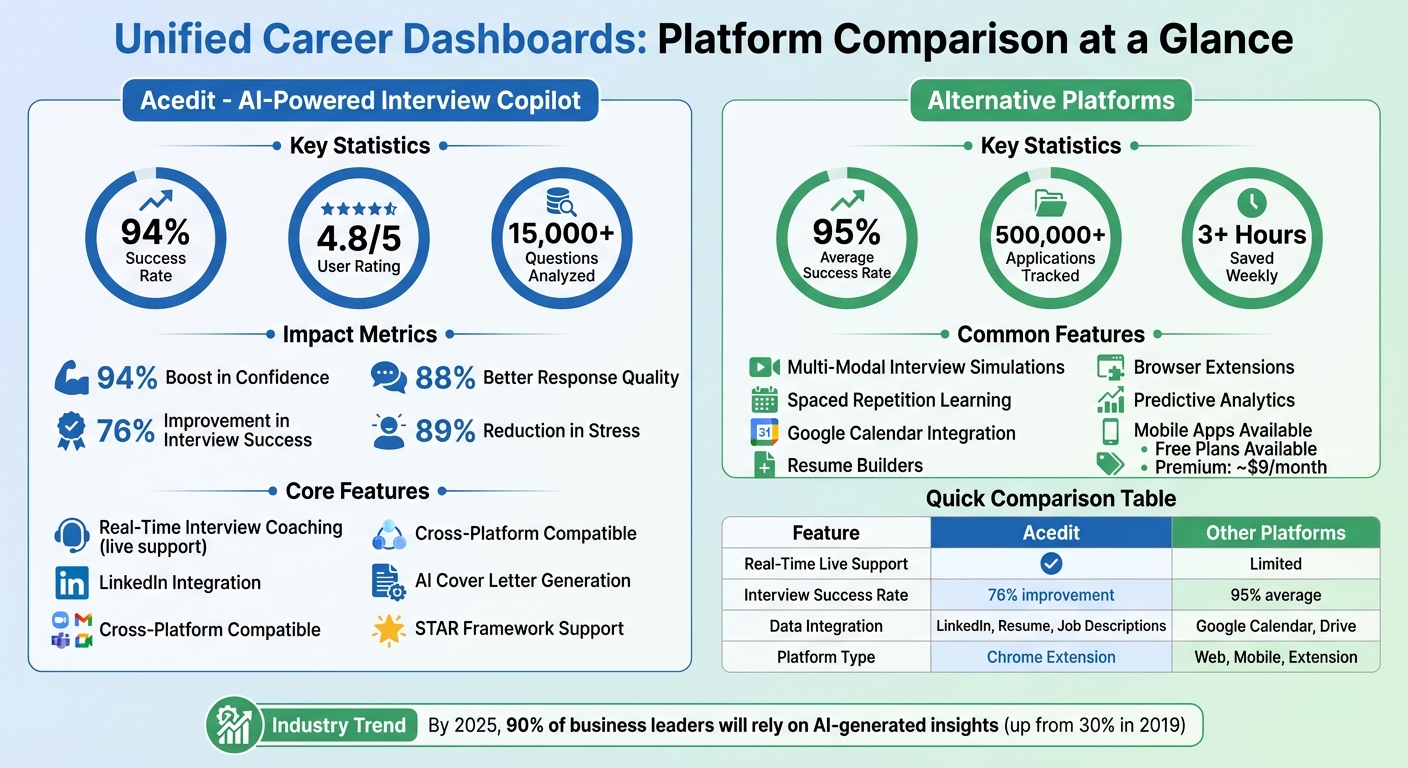
Acedit vs Other Career Dashboard Platforms: Features and Performance Comparison
1. Acedit
Real-Time Interview Coaching
Acedit operates behind the scenes during live video interviews, offering real-time support that’s completely invisible to interviewers. This Chrome extension identifies questions as they’re asked and instantly provides response suggestions, helping users navigate even the toughest interviews without hesitation. Before stepping into a live interview, users can prepare with AI-driven mock sessions that mimic real scenarios. The best part? The same AI models power both practice and live coaching, ensuring a seamless transition. The results speak for themselves: a 94% boost in confidence, 76% improvement in interview success rates, 88% better response quality, and an 89% reduction in stress during interviews. So far, the platform has analyzed over 15,000 interview questions.
"The AI Interview Copilot gave me the confidence I needed to tackle tough questions, and it helped me land a dream job in consultation."
These real-time tools are just one piece of Acedit’s broader, data-driven ecosystem.
Centralized Data Integration
One of Acedit’s standout features is its ability to consolidate all your professional data into one place. By pulling information from your LinkedIn profile, resume, and target job descriptions, it crafts responses that truly reflect your experience. This eliminates the hassle of juggling multiple tools or manually transferring details, letting your documented achievements directly shape your interview prep.
Acedit doesn’t stop at interviews. Its AI can also generate personalized cover letters by analyzing your LinkedIn writing style, ensuring the tone feels natural and authentic. For premium users, there’s even an option to refine responses using the STAR (Situation, Task, Action, Result) framework.
This unified approach ensures consistency across all aspects of your professional communication.
Cross-Platform Compatibility
Acedit works seamlessly with popular video conferencing platforms like Zoom, Microsoft Teams, and Google Meet. Its browser-based design means it’s accessible on any device that supports Chrome, whether you’re using a Windows laptop or a MacBook. With a 4.8/5 rating and a 94% success rate, it’s clear that Acedit delivers reliable and effective support.
sbb-itb-20a3bee
2. Other Career Dashboard Platforms
Real-Time Interview Coaching
Different platforms take unique approaches to interview preparation. Some focus on offering multi-modal interview simulations, providing feedback on aspects like delivery and clarity. Others use techniques like spaced repetition to help users tackle challenging questions tailored to specific roles and experience levels. These tools emphasize practice sessions over real-time interview support, giving users the chance to refine their skills before the actual interview. This emphasis on preparation naturally connects to how these platforms manage career data.
Centralized Data Integration
Today's career dashboards excel at bringing together information from various sources into a single, unified view. For instance, some platforms sync with Google Calendar to automatically pull in interview dates or use Google Drive for secure backups. Others integrate features like resume builders, profile optimization tools, and networking trackers into one streamlined interface. With over 500,000 applications tracked across platforms, it's clear that centralized career management is widely embraced. Many even offer browser extensions, letting users clip job listings from any site and use AI to autofill application forms instantly.
"I went from tracking 40+ applications in a messy spreadsheet to having everything organized in one beautiful dashboard." - Sarah Chen, Product Manager at Google
By combining integrated data with analytics, these platforms provide even deeper insights into career development.
Predictive Analytics for Career Growth
Some platforms go beyond basic tracking, offering data-driven insights to refine job search strategies. They analyze metrics like response rates and interview timings to highlight what works best, with some boasting a 95% success rate on average. These analytics tools help users measure application success and spot trends in hiring processes. Armed with this information, job seekers can fine-tune their approach to maximize results.
"The AI reminders are a game-changer. I never missed a follow-up and my response rate doubled." - Marcus Johnson, Software Engineer at Microsoft
Cross-Platform Compatibility
The best platforms ensure users can seamlessly manage their job search across devices. With web-based interfaces, mobile apps, and browser extensions, data stays synchronized no matter where users log in from. Pricing varies, with some offering free plans for limited use, while premium features can cost around $9/month. These options make it easier than ever to stay organized and on top of career opportunities.
Advantages and Disadvantages
Unified dashboards, like those powered by AI-driven platforms such as Acedit, which offer various ways to use AI in your job search,, bring a mix of benefits and challenges. These platforms rely on plain English for interaction, removing the need for technical know-how, and offer real-time insights and automated support. This stands in stark contrast to traditional dashboards, which often provide static data snapshots and require users to manually sift through information. It's no wonder adoption rates for older systems remain as low as 20%, as they fail to explain the "why" behind the data.
One standout benefit of modern career dashboards is their ability to deliver hyper-personalized experiences. For example, LinkedIn integration ensures profiles are more accurate, resulting in interview responses that align closely with a user's career history - something most users find highly appealing. However, these advanced features often come at a cost. Premium options like enhanced AI models, automated cover letter creation, and detailed profile analysis are typically behind a paywall, which can be a hurdle for some job seekers.
| Feature | Strengths | Limitations |
|---|---|---|
| Real-Time AI Support | Offers instant coaching during live interviews, reducing interview stress | Limited to browser-based platforms; incompatible with desktop apps |
| LinkedIn Integration | Provides accurate representation of experience and effective use of achievements | Requires a premium subscription for in-depth profile analysis |
| Natural Language Queries | Allows interaction in plain English, no technical expertise needed | Struggles with unexpected or out-of-context questions |
These tools also enhance efficiency by cutting response times and simplifying data management, letting users focus on preparation rather than administrative tasks. When dashboards are designed with clear, relevant metrics and prioritize data integrity, they become powerful decision-making tools instead of overwhelming interfaces.
However, there are some real concerns to consider. Data privacy is a significant issue, as is the potential for bias in AI training data, which can lead to skewed or inaccurate results. Another risk is "hallucinations", where the AI generates misleading or incorrect information. Users should ensure compatibility with their setup - especially for interviews conducted outside of a browser - and thoroughly review privacy policies to confirm their data won’t be shared without consent.
The trend toward AI-powered career tools is undeniable. By 2025, it’s estimated that 90% of business leaders will rely on AI-generated insights, a sharp increase from just 30% in 2019. This shift underscores the growing role of intelligent, personalized tools in shaping the future of career development.
Conclusion
Unified career dashboards bring everything together, offering a centralized way to manage career data while delivering real-time, AI-powered insights. As highlighted earlier, Acedit simplifies career management by removing the headaches of juggling multiple tools and providing a single, reliable place to track your professional achievements.
For job seekers, especially those preparing for interviews, Acedit offers AI-driven assistance that redefines how you approach and excel in interviews. Setting clear KPIs - such as improving interview success rates, refining specific skills, or tracking application milestones - can help you seamlessly integrate Acedit with tools like LinkedIn. This ensures your career data stays accurate and up-to-date.
"Leaders who use interactive dashboards and data-driven insights are 68% faster at generating actionable insights and see 24% lower attrition rates." - Leapsome
Companies using unified dashboards report saving over three hours per person weekly on status updates. Whether you're a student planning for career readiness, a professional monitoring skill growth, or someone navigating career transitions, these intelligent tools are reshaping how we approach career development. Acedit equips professionals with the tools they need for efficient, data-informed career progression.
FAQs
Can Acedit be used during interviews?
Acedit can absolutely be used during interviews. Its real-time coaching tools operate discreetly, ensuring that interviewers remain unaware. This allows candidates to fine-tune their answers on the spot without any visible indication that they’re being guided.
How does Acedit protect my LinkedIn and resume data?
Acedit protects your LinkedIn and resume information by using it solely to refine your interview answers and enhance your profile. Your data is kept private and secure, never shared publicly or exposed.
What do I need to run Acedit during a live interview?
To use Acedit during a live interview, make sure the Chrome extension is properly installed and active. Link your LinkedIn profile to enable tailored responses, and ensure your internet connection is stable throughout the session. Acedit operates quietly in the background, identifying questions and providing real-time response suggestions - completely undetectable to the interviewer.