
Artificial intelligence is transforming workplaces, but it can't replace core human skills. Empathy, decision-making, and relationship-building remain essential for career success. These behavioral skills - like emotional intelligence, critical thinking, and ethical responsibility - bridge technical expertise with real-world impact. Employers prioritize these abilities in hiring, as they drive collaboration, trust, and innovation. By honing these skills and preparing effectively for interviews, you can stand out in an increasingly automated job market. Here's how to strengthen and showcase them.
5 Human Skills That AI Can't Replace
Core Behavioral Skills That AI Cannot Replace
AI can handle repetitive tasks with ease, but it can't replicate the core human skills that drive effective leadership, teamwork, and creative problem-solving in American workplaces. These uniquely human abilities are essential for thriving in an automated economy and are at the heart of collaboration and decision-making.
Emotional Intelligence and Empathy
Emotional intelligence (EI) is all about understanding and managing emotions - yours and others'. It includes self-awareness, self-regulation, motivation, empathy, and social skills. These are the traits that help you read the room during a tense meeting, notice when a colleague needs support, or adjust how you communicate with someone under stress.
Sure, AI can analyze sentiment in text or detect emotion in voice patterns, but it doesn’t truly feel. It can't grasp the depth of human joy or pain. Think about a customer service rep who picks up on an angry caller’s deeper frustration of feeling ignored or a nurse offering comfort to a grieving family. These moments require a level of human connection that AI simply can’t replicate. According to McKinsey research, social and emotional skills are among the top skill clusters that will be in high demand by 2030. Candidates who show emotional awareness during interviews - acknowledging their own challenges and demonstrating genuine care for others - tend to stand out as trustworthy and capable leaders. It’s this gap between emotional detection and genuine understanding that highlights the irreplaceable role of human empathy.
Critical Thinking and Complex Judgment
Critical thinking is the ability to analyze information, question assumptions, and make thoughtful decisions even when faced with uncertainty. While AI is great at processing massive datasets and following programmed logic, it falters when navigating ethical dilemmas or balancing conflicting values.
Take a nurse in a crisis deciding how to allocate limited resources among patients. This requires weighing fairness, outcomes, and long-term consequences - decisions grounded in ethical judgment that AI can’t emulate. Similarly, in business, a project manager might need to balance stakeholder interests, company values, and unpredictable risks. AI can optimize within set parameters, but it struggles with the nuanced trade-offs and ethical reasoning that are second nature to humans.
Integrity and Ethical Responsibility
Integrity is about aligning your actions with your values and taking accountability for your choices - even when it’s tough. Ethical responsibility often requires making moral decisions, sometimes at personal risk. AI, on the other hand, operates within programmed rules and has no moral compass or personal stake in outcomes.
Consider an employee who refuses to cut corners under pressure, admits to mistakes despite potential backlash, or advocates for ethical practices even when it could harm their career. These actions build trust within an organization. Companies actively evaluate integrity during interviews and reference checks because technical expertise without ethical grounding can lead to major liabilities. It’s this kind of moral courage that defines human decision-making in complex situations.
Creativity and Innovation
Creativity isn’t just about improving what exists - it’s about imagining something entirely new. It’s the ability to connect unrelated ideas, reframe problems, and envision solutions that haven’t been tried before. While AI can recombine existing data or suggest tweaks to known solutions, it doesn’t originate groundbreaking concepts.
The difference is clear: AI excels at optimization, but humans drive true innovation. For example, a logistics manager might realize that a delivery issue isn’t about route planning but rather about staffing shortages at a warehouse - a leap in thinking that AI’s rigid parameters might miss. Humans create new markets and industries by thinking beyond the obvious, something AI isn’t programmed to do.
Relationship Building and Trust-Based Influence
Building relationships means creating genuine connections rooted in mutual understanding and shared values. Trust-based influence goes beyond authority; it’s about earning credibility through consistent actions over time. These skills require interpreting social cues, adapting communication styles, and managing complex interpersonal dynamics.
AI might provide email templates or suggest talking points, but it can’t build trust. It doesn’t remember personal details, follow up on past conversations, or advocate for someone in their absence. Research shows that teams with strong interpersonal skills are 40% more likely to succeed in completing projects. In hybrid work settings, where face-to-face interactions are limited, the ability to connect and maintain relationships becomes even more crucial.
A project manager who understands their team’s working styles can prevent conflicts before they arise. Similarly, a leader with a reputation for fairness and reliability can guide organizational change more effectively. In interviews, candidates often highlight these skills by sharing stories of resolving conflicts, influencing others without formal authority, or uniting diverse groups to achieve a goal. Even in a tech-driven world, people trust other humans more than AI when it comes to sensitive, relationship-based decisions.
How to Develop Behavioral Skills
Developing behavioral skills isn't about relying on natural talent - it's about deliberate effort, reflection, and practice. These skills grow through real-world experiences, feedback, and self-awareness. And when you can effectively communicate these skills in interviews, they become your secret weapon. Here's how you can actively work on these key areas.
Improving Emotional Intelligence
Emotional intelligence starts with making self-awareness and empathy part of your everyday life. A simple way to begin is by keeping a short log after important conversations or meetings. Write down how you felt, the emotions others might have experienced, and how you could have responded differently. Over time, this helps you recognize patterns and adjust your approach before emotions take over.
Another great strategy is to seek feedback. Ask a trusted colleague or manager for input on how you come across in meetings or one-on-ones. Be specific: "Do I interrupt? Do I seem defensive when challenged? How do I handle stress?" Honest feedback can reveal blind spots that self-reflection might miss.
In moments of tension, pause to summarize the other person's perspective before sharing your own. This simple act shows you're listening and not just waiting for your turn to speak.
To prepare for interviews, tools like Acedit can help you refine your responses to questions such as, "Tell me about a time you handled a conflict on your team." Start with a draft, then refine it to include emotional insights and outcomes, like recognizing a teammate's frustration and working toward a stronger relationship. Practicing these responses helps you stay calm under pressure and show genuine empathy.
Strengthening Critical Thinking and Judgment
Critical thinking improves when you take a structured approach to decisions. Instead of relying on instinct, try defining the problem, listing options with pros and cons, making a decision, and reviewing the outcome afterward. This method forces you to weigh trade-offs and consider consequences more thoughtfully.
After making decisions at work, take a few minutes to reflect: What did you expect to happen? What actually happened? What would you do differently next time? Over time, this habit sharpens your judgment by turning real-world experiences into learning opportunities.
When preparing for interviews, use frameworks like STAR (Situation, Task, Action, Result) to analyze past decisions. For example, if you're asked, "Describe a time you had to make a tough decision with incomplete data", focus on the trade-offs, risks, and lessons learned. Tools like Acedit can help you draft and refine these stories, ensuring your responses highlight both your thought process and the results.
Demonstrating Integrity and Accountability
Integrity is all about how you handle tough situations and mistakes. If you miss a deadline, discover an error, or face a tough ethical choice, address it head-on. Inform your team or manager early, explain what happened, and outline steps to fix the issue and prevent it from recurring. Taking responsibility quickly builds trust.
Be transparent with your commitments, give credit where it’s due, and document important decisions. These habits show you're reliable and trustworthy over time.
When preparing for interviews, use Acedit to craft stories about times you owned a mistake or escalated a concern. For example, prompts like "Describe a situation where you took accountability for a project setback" can help you outline the impact, your response, and the lessons learned. Practicing these stories ensures you sound confident and sincere when discussing difficult moments.
Building Creativity and Innovation
Creativity thrives when you're open to new ideas and willing to experiment. Make it a goal to suggest small improvements to processes or workflows in your role. Try running meetings in a new format or volunteering for projects outside your usual scope. These experiences not only improve your problem-solving skills but also give you examples to share during interviews.
Use techniques like asking "What if?" or applying the SCAMPER method (Substitute, Combine, Adapt, Modify, Put to another use, Eliminate, Reverse) to challenge existing processes and generate fresh ideas.
Tools like Acedit can help you turn these experiences into impactful interview stories. For example, prompts like "Tell me about a time you improved a process" can guide you to highlight inefficiencies, your proposed solution, measurable outcomes (like time saved or errors reduced), and how you handled any resistance. These narratives show your ability to innovate while collaborating with others.
Improving Relationship Building and Influence
Strong relationships are built on trust and thoughtful communication. Take the time to understand your coworkers' priorities and adapt your communication style to fit their needs. Simple actions, like setting up short check-ins, sending clear follow-ups, and confirming outcomes, help build trust over time.
Before a difficult conversation, think through what success looks like for both you and the other person. Anticipate objections and address them upfront. When you need to persuade without formal authority, focus on the broader business impact and benefits for stakeholders, not just your personal preferences. Use data and real-life examples to strengthen your case.
Acedit can simulate scenarios where you need to collaborate or resolve conflicts, helping you rehearse your approach. For example, practice questions like "Tell me about a time you convinced a stakeholder to support your idea" or "Describe a conflict with a coworker and how you resolved it." Refine your responses to emphasize trust-building actions, perspective-taking, and the results of your efforts. This preparation ensures you come across as calm, solutions-focused, and respectful - qualities that are hard to fake.
A Routine for Growth
To keep developing these skills, set aside 10–15 minutes each week to reflect on what went well and what was challenging. Have monthly feedback conversations with a colleague or manager, and choose one skill to focus on each month - like asking clarifying questions in meetings or improving cross-team communication. Align these efforts with your quarterly goals to stay consistent.
Use Acedit weekly to practice behavioral questions and refine your stories. Before big moments like interviews or performance reviews, run focused simulations targeting emotional intelligence, judgment, integrity, creativity, and influence. This regular practice ensures you're not just improving day-to-day but also ready to showcase your skills when it truly matters.
sbb-itb-20a3bee
How Behavioral Skills Impact Interview Success
Behavioral skills play a pivotal role in hiring decisions, demonstrating not just your technical know-how but also your ability to collaborate and thrive in the long run. Adapting to this shift and preparing accordingly can significantly enhance your interview performance and career prospects.
Behavioral Skills and Hiring Trends
The hiring landscape in the U.S. has evolved. Employers are no longer just scanning resumes or certifications; they’re paying close attention to how candidates work, communicate, and collaborate. The top seven behavioral skills sought during interviews include communication, problem-solving, adaptability, teamwork, emotional intelligence, leadership, and creativity. These qualities are assessed through structured behavioral interviews, role-play scenarios, and psychometric tests that translate your responses into measurable scores.
A poor fit in behavioral skills can waste time and disrupt efficiency, highlighting the importance of these abilities. Research from McKinsey backs this up, predicting that by 2030, social and emotional skills will rank among the top three competencies across industries. As automation takes over technical tasks, skills like empathy, complex decision-making, and relationship-building become key differentiators.
This is particularly vital for roles involving customer interaction, leadership, or teamwork. For example, a customer service representative needs to handle stress and communicate with empathy, while a project manager must understand team dynamics to avoid conflicts that could derail deadlines. Expect interviewers to ask detailed, situational questions - often using the STAR method - to gauge how you manage challenges, adapt to changes, or influence others.
To meet these demands, candidates are increasingly turning to advanced preparation tools.
Using Acedit for Interview Preparation
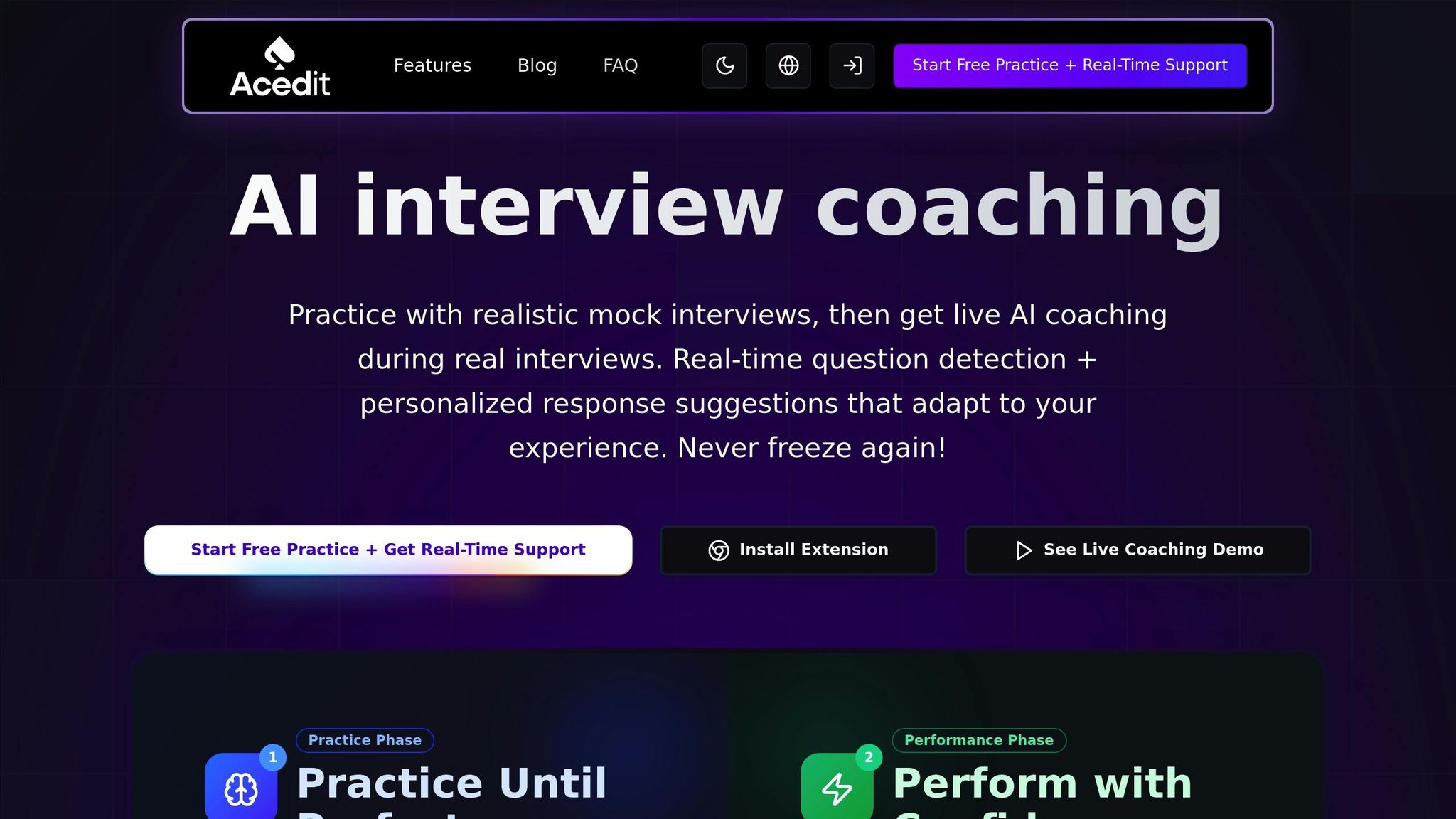
Preparing for behavioral interviews requires clear, confident storytelling and well-honed responses. This is where Acedit can make a difference.
Acedit’s mock interview sessions simulate real-life scenarios with role-specific questions and personalized feedback. By analyzing your resume, job description, and company background, the tool generates tailored questions that closely mirror what you’ll encounter in the actual interview. This ensures your practice is targeted and relevant.
For example, practicing a question like, “Describe a conflict you resolved,” helps you apply the STAR method effectively. Acedit’s Custom STAR Examples feature guides you to include just the right amount of detail - enough to showcase your skills without over-explaining.
The AI Skill Gap Analysis feature pinpoints areas where your responses might fall short. Perhaps you’re not clearly emphasizing outcomes, or you’re focusing too much on team achievements and not enough on your individual contributions. With this feedback, you can refine your answers before stepping into the real interview.
During live interviews, Acedit’s real-time AI coaching offers subtle support, such as detecting questions and suggesting tailored responses. While it doesn’t provide scripted answers, it acts as a safety net to keep you composed, even under pressure. For those on higher-tier plans, unlimited practice sessions allow you to rehearse until your delivery feels natural and confident. Users report an average confidence boost of 98%.
Acedit’s impact is evident in its results: users have completed over 179 practice questions and secured more than 45 dream jobs. One user, Ethan Brown, shared:
"The AI Interview Copilot gave me the confidence I needed to tackle tough questions, and it helped me land a dream job in consultation".
Another user, Olivia Mitchell, said:
"Acedit's coaching and resources instilled confidence for my job hunt".
Combining Behavioral Skills with AI Tools
Pairing strong behavioral skills with AI-driven preparation can elevate your interview readiness. The best preparation strategy combines your personal experiences and emotional intelligence with the structure and feedback provided by tools like Acedit. Your stories and insights provide the foundation, while AI tools help you refine and present them effectively.
Start by building experiences that showcase your emotional intelligence, problem-solving, and relationship-building abilities. For instance, if you’ve successfully handled a challenging team conflict, that story can highlight your emotional intelligence and collaboration skills. Use Acedit to practice articulating this experience, focusing on the competencies you demonstrated and fine-tuning your delivery until it feels natural and confident.
Authenticity matters. Interviewers can easily spot rehearsed or insincere answers. They want to see how you genuinely think, feel, and act under pressure. Acedit doesn’t replace your authenticity - it helps you present it more effectively. For candidates with limited professional experience, the tool can also help identify examples from academic projects, volunteer work, or extracurricular activities.
Ultimately, combining your behavioral strengths with AI-enhanced preparation can give you a clear edge. While many candidates may share similar technical qualifications, your ability to confidently showcase your behavioral skills - backed by focused practice with Acedit - can set you apart. Use Acedit strategically to target the specific competencies your role demands, whether it’s leadership, empathy, or stress management. The goal isn’t perfection - it’s preparation. Walk into your interview ready to articulate your strengths and handle unexpected questions with ease, turning opportunities into offers. This blend of human insight and AI support underscores the idea that behavioral skills remain a key competitive advantage.
Conclusion
The rise of automation has only increased the importance of distinctly human skills. While technical knowledge is still vital, your ability to connect with others, think critically, and handle complex challenges will play a larger role in shaping your career success. In fact, McKinsey forecasts that social and emotional skills will rank among the top three core competencies by 2030 - skills that machines simply cannot replicate.
Employers are already prioritizing these abilities, evaluating candidates' communication, problem-solving, and teamwork skills through structured interviews and role-play scenarios. Weaknesses in these areas can significantly impact productivity. That’s why demonstrating your behavioral skills during interviews is so important - and preparation is the key to doing it effectively.
This is where Acedit comes in. By offering mock interview sessions, AI-generated practice questions, and real-time coaching, Acedit helps you refine your ability to communicate your experiences clearly and confidently. It’s a practical way to translate your behavioral strengths into compelling narratives that resonate with employers. The results speak for themselves: Acedit has proven to be a valuable tool for sharpening these skills.
In an AI-driven job market, your behavioral skills are your edge. Strengthening emotional intelligence, critical thinking, and relationship-building abilities through real-world experience is essential. Then, with Acedit, you can confidently present these strengths during interviews. By combining genuine human abilities with focused preparation, you’ll unlock opportunities that technical skills alone can’t achieve. Enter your next interview ready to showcase not just your expertise, but also the interpersonal skills that employers value most. That’s how you stand out - and move your career forward.
FAQs
Why are behavioral skills essential and irreplaceable by AI in the workplace?
Behavioral skills - like empathy, adaptability, and effective communication - are distinctly human traits that AI simply can't replicate. These abilities are essential for building trust, working well with others, and handling the often tricky dynamics of workplace relationships. While AI is great at crunching numbers and automating tasks, it falls short when it comes to emotional intelligence and the deep understanding needed for authentic human interaction.
To sharpen these invaluable skills, you can engage in activities such as active listening, becoming more aware of emotions (both yours and others'), and asking for constructive feedback from colleagues. Tools like Acedit can also be a game-changer, offering support to polish your communication and interpersonal skills - especially when preparing for job interviews. It's all about making sure you leave a lasting impression in the professional world.
How can I build and demonstrate emotional intelligence in job interviews?
To showcase emotional intelligence during job interviews, hone your self-awareness, empathy, and communication skills. Pay attention to active listening, maintain steady eye contact, and provide thoughtful responses to demonstrate genuine understanding and engagement.
Tools like Acedit can be a game-changer for this process. They offer real-time coaching, tailored feedback, and simulated interview experiences. This kind of preparation not only builds your confidence but also helps you clearly convey your emotional intelligence to potential employers.
How can Acedit help me prepare for interviews that focus on behavioral skills?
Acedit takes your interview preparation to the next level with real-time question detection and customized response suggestions specifically designed for behavioral questions. These tools help you practice efficiently, crafting thoughtful answers that emphasize your interpersonal skills.
By offering AI-driven interview simulations, Acedit allows you to polish your communication style and boost your confidence. This way, you’ll be ready to highlight the qualities that set you apart from the competition.