
Your body language can make or break a job interview. AI tools now help job seekers refine nonverbal cues - like posture, eye contact, and tone - by analyzing webcam footage and providing detailed feedback. These systems go beyond traditional practice methods, identifying subtle behaviors that might undermine your confidence or engagement.
Key Takeaways:
- AI tracks: Eye contact, facial expressions, posture, gestures, and vocal tone.
- Common issues flagged: Breaking eye contact, slouching, forced smiles, or mismatched gestures.
- How it helps: Platforms like Acedit offer real-time feedback to improve your nonverbal communication, helping you appear more confident and focused.
By using AI-driven tools, you can practice and refine your nonverbal skills, ensuring you leave a stronger impression during interviews.
He Built an AI Model That Can Decode Your Emotions - Ep 19. with Alan Cowen
How AI Detects and Analyzes Body Language
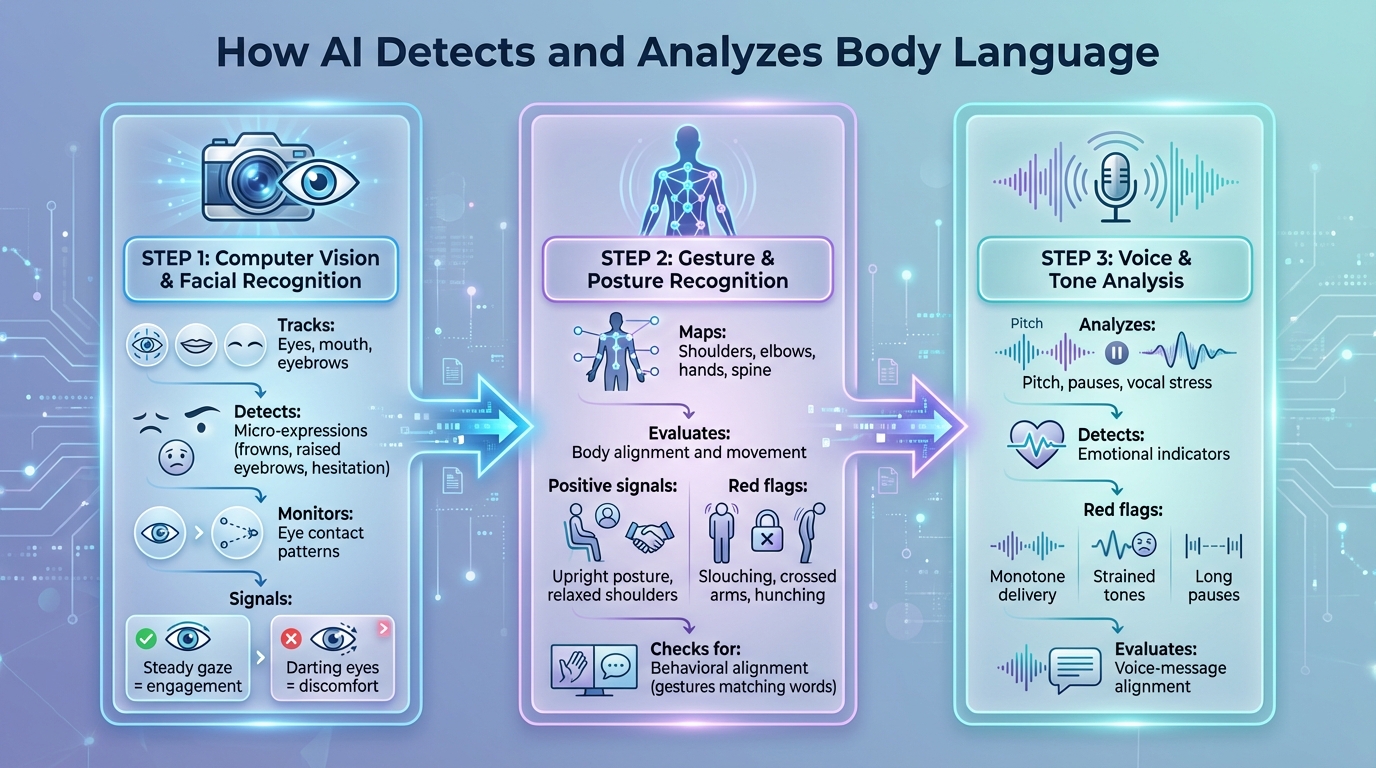
How AI Analyzes Body Language: 3 Key Detection Methods
AI systems break down nonverbal cues - using tools like computer vision, posture tracking, and voice analysis - to uncover behaviors that might stand out during an interview.
Computer Vision and Facial Recognition
Through computer vision, AI can track facial features like the eyes, mouth, and eyebrows in real time, helping it differentiate between genuine and forced expressions. These systems are even capable of identifying micro-expressions - those fleeting moments that reveal emotions such as a quick frown, a raised eyebrow, or brief hesitation.
The technology also pays attention to where you're looking. For instance, steady eye contact often suggests engagement, while darting eyes or avoiding eye contact - especially during sensitive discussions - might indicate discomfort or uncertainty. Beyond the face, AI tracks overall body movements and posture to gather additional context.
Gesture and Posture Recognition
AI maps key body points - like shoulders, elbows, hands, and spine - to evaluate posture and movement. Standing upright with relaxed shoulders typically conveys confidence and approachability, while slouching or hunching might suggest low energy or disengagement.
Gestures, such as nodding, tilting your head, or moving your hands, are also under scrutiny. The system looks for behavioral alignment - whether your gestures match what you're saying. For example, claiming strong leadership skills while crossing your arms or leaning back could raise a flag for inconsistency.
Voice and Tone Analysis
AI doesn't stop at visual cues; it also examines your voice. It analyzes pitch, pauses, and signs of vocal stress to assess your emotions. A monotone voice when expressing enthusiasm for a job might stand out as unusual, just as strained tones or long pauses when answering simple questions could hint at uncertainty.
Key Body Language Cues AI Monitors
Your nonverbal communication plays a significant role in how your confidence and engagement are perceived during interviews. AI systems evaluating interviews tend to focus on three primary areas: where your eyes are directed, what your facial expressions reveal, and how you use your posture and gestures.
Eye Contact and Gaze Patterns
AI systems analyze your gaze to approximate eye contact, evaluating how often and how long you look directly at the camera versus looking away. Consistent yet natural eye contact, with occasional glances away to collect your thoughts, is generally viewed favorably. On the other hand, behaviors like darting eyes, prolonged downward gazes, or frequently looking away during key moments can suggest nervousness or discomfort. Some platforms even track whether you’re looking at the screen while the interviewer speaks, using this data to gauge your focus and attentiveness.
Facial Micro-Expressions
AI doesn't stop at tracking your gaze - it also examines subtle facial movements. These micro-expressions, such as fleeting changes around your eyes, eyebrows, or mouth, can reveal emotions that might not align with your words. For example, a genuine smile that engages your eyes and relaxed facial muscles typically signals warmth and sincerity. On the flip side, forced or uneven smiles, lip-pressing, or furrowed brows can indicate stress or unease. If you claim confidence but display micro-expressions of doubt, the system may flag that discrepancy for further review. These facial cues provide additional context to your verbal responses, helping the AI evaluate the consistency of your communication.
Posture and Gestures
AI systems also map your body movements by tracking key points like your head, shoulders, and hands. A confident posture - sitting upright with relaxed shoulders and facing the camera - paired with natural, moderate hand gestures can signal engagement and self-assurance. In contrast, slouching, leaning too far back, or tightly crossing your arms may suggest low energy or defensiveness. Fidgeting, such as touching your face, playing with objects, or bouncing your leg, is often associated with anxiety and can detract from your overall impression. Striking a balance between purposeful gestures and moments of stillness can reinforce your verbal communication, whereas overly rigid or excessively animated behavior might seem unnatural.
sbb-itb-20a3bee
Using AI Feedback to Improve Interview Performance
Once you've received AI's detailed analysis of your body language, the next step is to use that feedback to sharpen your interview skills. AI tools provide a safe environment to practice and enhance your nonverbal communication without the pressure of real-life consequences.
Using AI Tools for Practice
AI-powered interview coaching platforms let you simulate realistic interview scenarios while offering instant feedback on your nonverbal cues. For example, tools like Acedit analyze your webcam feed during practice sessions, tracking elements like eye contact and posture shifts as you respond to questions. These systems can detect the questions being asked, suggest potential responses, and simultaneously monitor your body language to encourage consistent nonverbal communication. Starting with Acedit's free plan, you can explore AI-assisted interviews, record your sessions, and review the footage to identify moments where your eye contact wavers or your posture slips. This process helps you pinpoint areas for improvement and refine your approach.
Understanding AI Feedback
AI feedback offers actionable insights to help you fine-tune your performance. For instance, if the system highlights minimal eye contact or a closed posture, it’s an indication that these cues might be perceived as nervousness or a lack of confidence. Treat this feedback as an opportunity to focus on specific areas. For example, if your eye contact falls below the recommended 60–70% range, you can gradually work toward improving it. Pay attention to patterns, such as looking away when discussing certain topics, and use these observations to guide your practice. AI-generated reports can also help you connect specific questions to moments of less confident body language, so you know where to focus during your next practice session.
Developing Nonverbal Communication Skills
Improving your body language takes intentional effort and clear goals. For eye contact, practice maintaining your gaze on the camera lens for 3–5 seconds at a time during AI simulations, while keeping quick, darting movements to under 20% of your total interview time. Dedicate 15–20 minutes daily to practicing open, upright posture and sustained eye contact. Use AI feedback to correct habits like slouching or crossing your arms. As you record your responses, check whether your gestures align with your words. Watch your playback to spot subtle expressions, such as forced smiles or furrowed brows, and rehearse until your facial expressions naturally convey confidence and authenticity. With consistent practice and AI guidance, you’ll develop the nonverbal skills needed to leave a strong impression in any interview.
Conclusion
AI is reshaping how candidates prepare for interviews by offering detailed feedback on nonverbal cues that are often overlooked. These tools evaluate your body language against markers of confidence, providing insights that can give U.S. job seekers a clear edge in today's competitive hiring landscape. Understanding what AI observes - and learning how to adjust accordingly - can help you excel in both automated screenings and live interviews by turning feedback into actionable improvements.
The real power lies in applying these insights. AI tools can reveal patterns you might miss, like breaking eye contact during challenging questions or slouching as the conversation progresses. With platforms like Acedit, you can simulate interviews and refine your nonverbal communication step by step. Acedit's real-time feedback pinpoints moments when your body language slips, helping you turn small adjustments into meaningful progress. This kind of practice bridges the gap between preparation and performance.
It's important to note that AI scores highlight trends, not definitive judgments. Use them to identify habits while staying true to yourself. Improvements like maintaining steady eye contact, sitting with good posture, and speaking with a clear tone not only help you navigate AI screenings but also leave a stronger impression on human interviewers. As more U.S. companies adopt AI in their hiring processes, mastering these nonverbal skills can give you an advantage and reduce on-camera anxiety.
Incorporating AI-driven body language training into your preparation ensures consistency throughout every stage of the interview process. Tools like Acedit go beyond body language by helping you craft personalized answers, create AI-assisted cover letters, and maintain a cohesive online presence. This ensures that U.S. employers see you as a polished and credible candidate at every interaction. By aligning your on-camera presence with AI insights and committing to regular practice, you'll build the nonverbal communication skills needed to stand out in today's job market.
FAQs
How does AI help improve my body language during interviews?
AI can help refine your body language by analyzing your posture, gestures, and facial expressions during mock interviews or practice sessions. It offers real-time feedback, guiding you to project confidence, stay engaged, and present yourself professionally.
By spotting non-verbal signals that might need tweaking, AI gives you the tools to leave a stronger impression and communicate more effectively in interviews. This tailored feedback not only improves your presentation but also builds your confidence for the big day.
What nonverbal cues does AI evaluate during interviews?
AI takes a close look at important nonverbal signals to gauge a candidate's communication style and confidence. These signals include facial expressions, eye contact, gestures, posture, and overall body language. By examining these behaviors, AI can offer insights into how a candidate carries themselves and engages in a professional environment.
Knowing how these cues are analyzed can help job seekers fine-tune their interview skills and make a lasting, positive impression.
How can AI tell if an expression is genuine or fake?
AI has the ability to determine whether an expression is authentic or fabricated by examining microexpressions - those brief, involuntary facial muscle movements - and patterns in body language. These tiny reactions often betray genuine emotions, even when someone attempts to conceal them.
In interviews, AI tools can spot mismatches between what a person says and their nonverbal signals, like shifts in posture or changes in eye movement. This technology provides a deeper look into emotional sincerity and overall engagement, offering useful insights for both candidates and recruiters.