
While AI tools are transforming how businesses predict and respond to market demand, they are equally impactful for individual career growth. By integrating real-time data from sources like social media, weather updates, and IoT signals, these tools improve forecasting accuracy, reduce errors, and enable faster decision-making. Companies using AI have cut forecasting errors by up to 50% and reduced product unavailability by 65%. The global market for AI demand forecasting software is expected to reach $827.7 million by 2025, with cloud-based solutions dominating due to scalability and real-time processing.
Key Features:
- Predictive Analytics: AI analyzes diverse variables to forecast trends, even for products with no sales history.
- Real-Time Integration: Continuous updates from IoT, POS, and social media ensure forecasts remain accurate.
- Industry-Specific Solutions: Tailored tools optimize inventory, pricing, and production based on sector needs.
Top Tools:
- Anaplan: Enterprise-grade planning with machine learning models.
- Blue Yonder: Supply chain optimization using real-time adjustments.
- Brandwatch: Social sentiment analysis for trend detection.
- o9 Solutions: Comprehensive data integration for complex supply chains.
- Peak.ai: Decision intelligence for proactive demand management.
Choosing the Right Tool:
- Match the tool to your business size, goals, and budget.
- Prioritize seamless data integration and transparency.
- Test solutions with a short pilot program to measure ROI.
AI-driven demand analysis offers businesses a faster, more precise way to adapt to market changes, ensuring they stay competitive in a rapidly shifting landscape.
Key Features of AI Tools for Demand Analysis
Predictive Analytics and Forecasting
AI tools leverage advanced neural networks to uncover patterns that traditional models often miss. Instead of just analyzing past sales data, these systems evaluate hundreds of variables - ranging from social media sentiment to external market signals - to predict future trends with greater accuracy.
This approach is particularly effective in situations where historical data are sparse, like during new product launches or unexpected market disruptions. Machine learning algorithms continuously improve as they process new information, identifying connections such as how weather patterns combined with online sentiment can cause sudden demand surges. For instance, a major agribusiness company consolidated 72 million rows of data from 18 sources, resulting in an 8% improvement in accuracy, 96% faster scheduling, and $30 million in additional gains [Source: Intuit Enterprise Blog, 2025]. This level of precision strengthens demand analysis and decision-making.
Real-Time Data Integration
Building on predictive analytics, real-time data integration ensures forecasts stay current and actionable. Unlike traditional methods that rely on weekly or monthly updates, AI systems process data from IoT devices, POS systems, and social media feeds continuously. This allows for "demand sensing", where forecasts are updated daily - or even hourly - based on the latest information.
For example, Walmart uses AI-powered demand sensing to analyze factors like weather, local events, and customer purchasing trends in real time. This enables them to adjust inventory dynamically, leading to better forecast accuracy. Real-time integration offers measurable benefits, such as a 10–20% improvement in forecast accuracy, a 5–10% reduction in inventory levels, and up to a 2% increase in revenue. As the Kearney Supply Chain Institute and AWS put it:
"Even the highest-quality internal data is, by itself, no longer sufficient for extrapolating the future".
By comparing internal records with external factors like geopolitical events and social sentiment, businesses can quickly spot market shifts and take action - adjusting logistics, reallocating inventory, or tweaking promotions - before competitors can respond. This agility enhances the responsiveness of demand forecasting.
Sector-Specific Customization
AI tools go beyond general forecasting by offering tailored solutions for specific industries. In retail, they optimize stock allocation and pricing strategies. In healthcare, they predict emergency room admission rates based on seasonal patterns. Manufacturing systems align production schedules with raw material availability to reduce waste, while in the automotive sector, combining social media sentiment with sales data provides insights for pricing strategies .
For example, a global biopharma company adopted AI-driven inventory management, ensuring consistent product availability across its facilities. This led to an 11% boost in customer retention [Source: Journal of Knowledge Learning and Science Technology via Intuit, 2025]. Additionally, these tools allow businesses to simulate scenarios - like testing the outcomes of price changes or marketing campaigns - before committing resources. This level of industry-specific precision ensures demand analysis aligns closely with operational needs.
sbb-itb-20a3bee
Accurate AI-Powered Forecasting to Transform Demand Planning | Case Study
Best AI Tools for Industry Demand Analysis
The tools below showcase how AI is reshaping the way businesses approach industry demand analysis, offering smarter, faster, and more accurate insights.
GWI Agent Spark
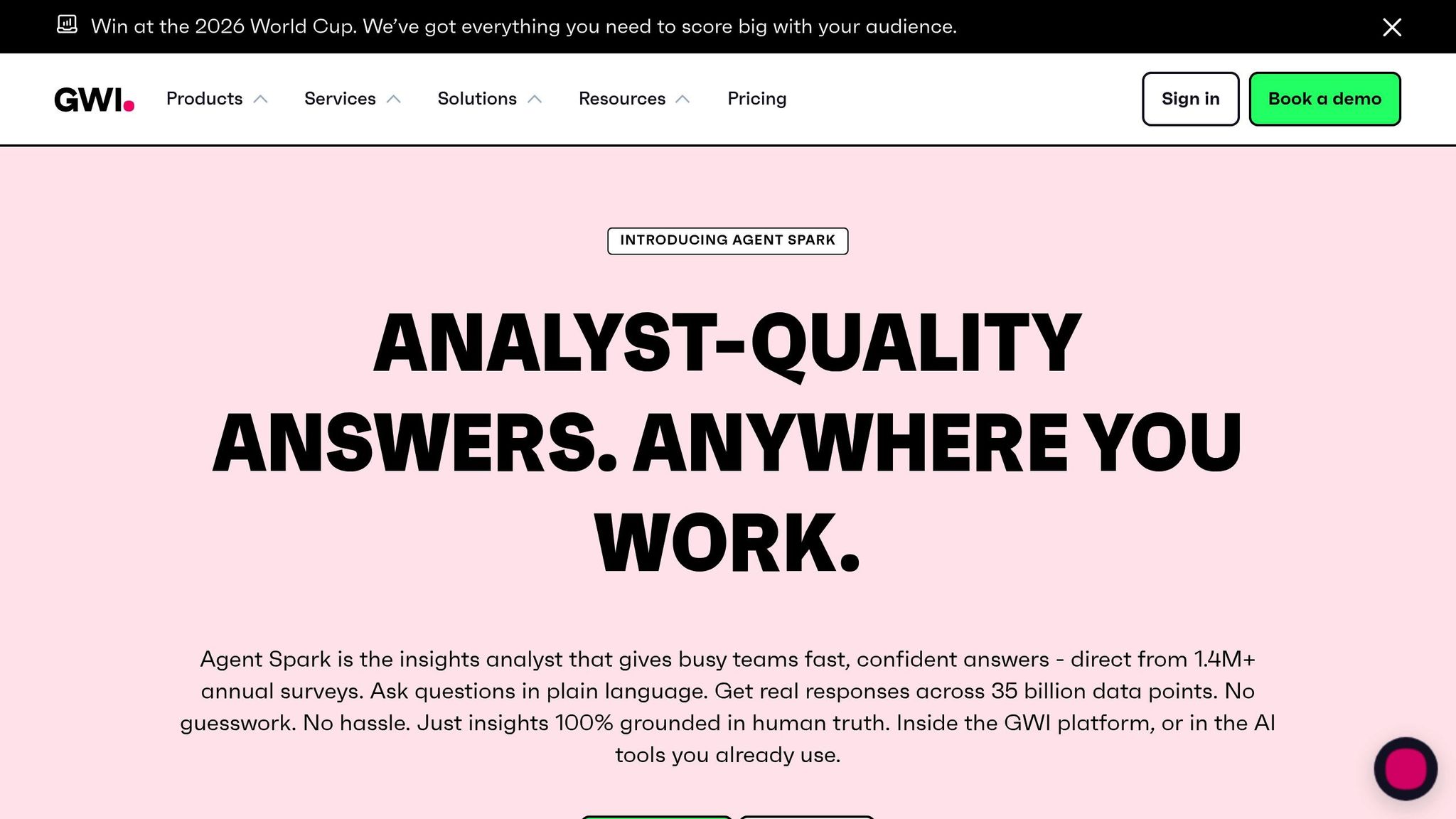
GWI Agent Spark taps into a wealth of consumer data through conversational AI. It analyzes over 1.4 million annual surveys, covering data on nearly 3 billion consumers across 53 countries and offering insights from 35 billion data points. This tool is a natural fit for industries like automotive, luxury goods, gaming, sports, travel, and alcohol, as it builds on more than 15 years of validated research. Best of all, it integrates seamlessly into workflows like ChatGPT and Claude, and existing GWI users can access it at no additional cost.
Quantilope
Quantilope specializes in simplifying survey analysis. By automating insights, it helps businesses predict demand trends more effectively, making it a go-to solution for organizations that rely heavily on survey data for demand planning.
Brandwatch
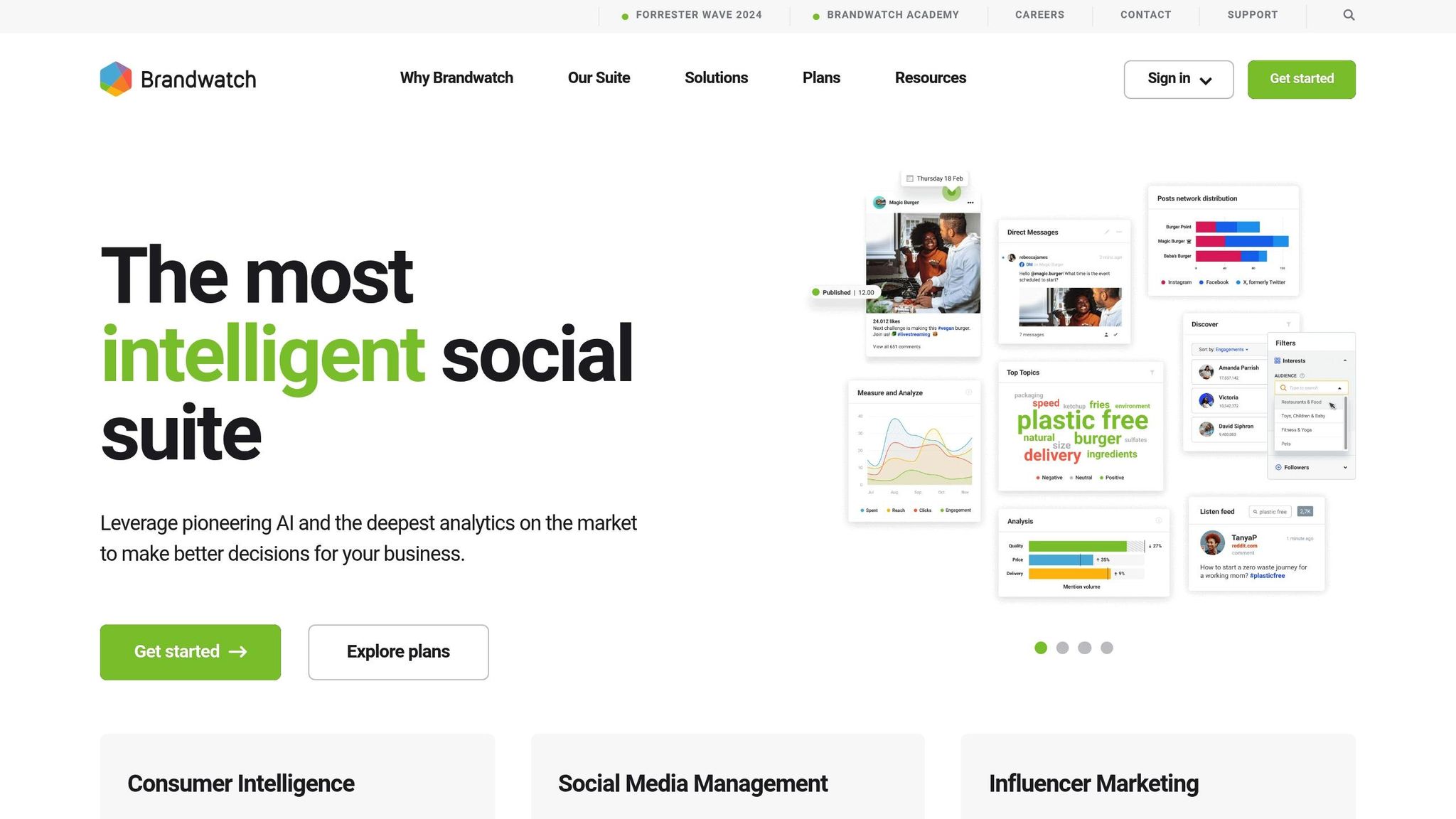
Brandwatch focuses on digital sentiment analysis. It processes millions of online posts, keeping tabs on social media and other digital channels to spot emerging trends. This AI-powered tool helps businesses react quickly to shifts in consumer sentiment and stay ahead of the curve.
Anaplan
Anaplan offers a connected platform for enterprise-grade demand planning, trusted by over 2,400 global brands. Its PlanIQ feature leverages advanced machine learning models like DeepAR+ and Prophet to generate scenario-based forecasts, even for users without deep technical expertise.
Real-world results include:
- Wright Medical Technology: Improved forecast accuracy from 60% to over 85%, with some products hitting 90%.
- Springs Window Fashions: Achieved a 30% improvement in demand forecast accuracy.
- London Gatwick Airport: Produced operational forecasts in just 2.5 days with 95% accuracy three weeks in advance.
Chris Fields, Head of Sales & Operations Planning at London Gatwick Airport, praised the tool's efficiency, while Justin Moderow from Wright Medical Technology noted its robust demand modeling, saying:
"Anaplan provides greater visibility and enables more robust demand modeling, and as a result, we are more accurate in our demand forecasting."
Additionally, Anaplan's dynamic segmentation allows users to tailor analytics based on product, customer, region, or channel. Its CoPlanner feature, powered by generative AI, makes it even easier to surface patterns and understand the drivers behind forecasts. David Webb of South Central Ambulance Service highlighted its quick setup, stating:
"PlanIQ makes generating precise forecasts easy, taking only 2.5 weeks to get up and running and delivering quick time to value."
o9 Solutions
o9 Solutions stands out for its ability to integrate data from multiple sources, offering businesses a comprehensive view of demand forecasting and inventory optimization. This makes it particularly useful for managing complex supply chains.
Blue Yonder
Blue Yonder uses AI to dynamically adjust inventory by tracking point-of-sale data, e-commerce activity, and other market signals. Retailers benefit from its ability to quickly adapt to changes in customer behavior, ensuring inventory levels align with real-time demand.
Crayon
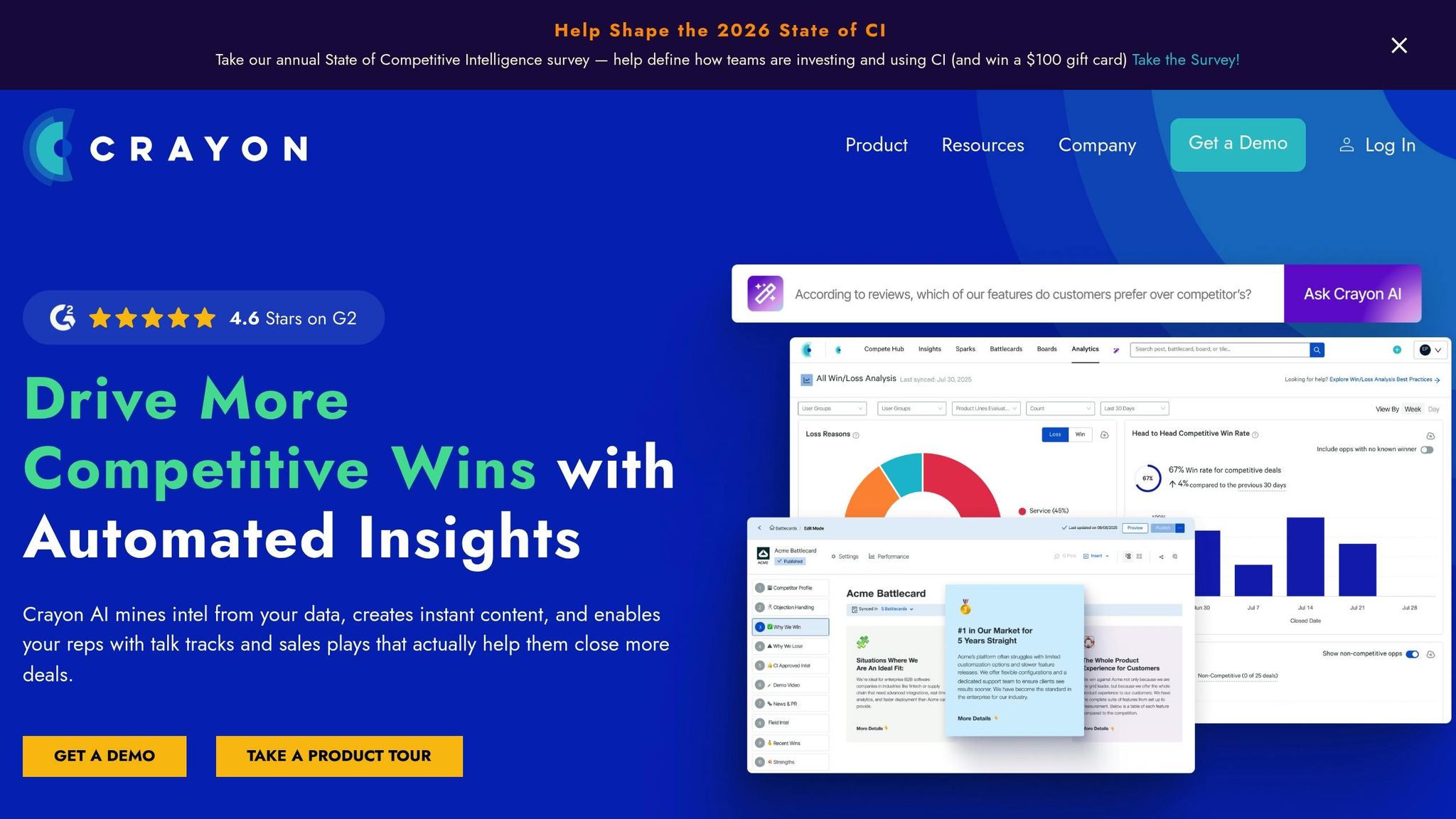
Crayon focuses on competitive intelligence, giving businesses a clear view of industry-specific shifts in competitor pricing, messaging, and campaigns. By staying ahead of competitive movements, companies can anticipate demand changes and make informed decisions before they impact performance.
Peak.ai
Peak.ai is designed to help businesses move from reactive to proactive demand management. Its decision intelligence platform processes vast amounts of data to uncover actionable patterns, making advanced AI accessible to everyday business users. This empowers organizations to forecast demand more effectively and make better decisions in real time.
AI Tools Comparison Table
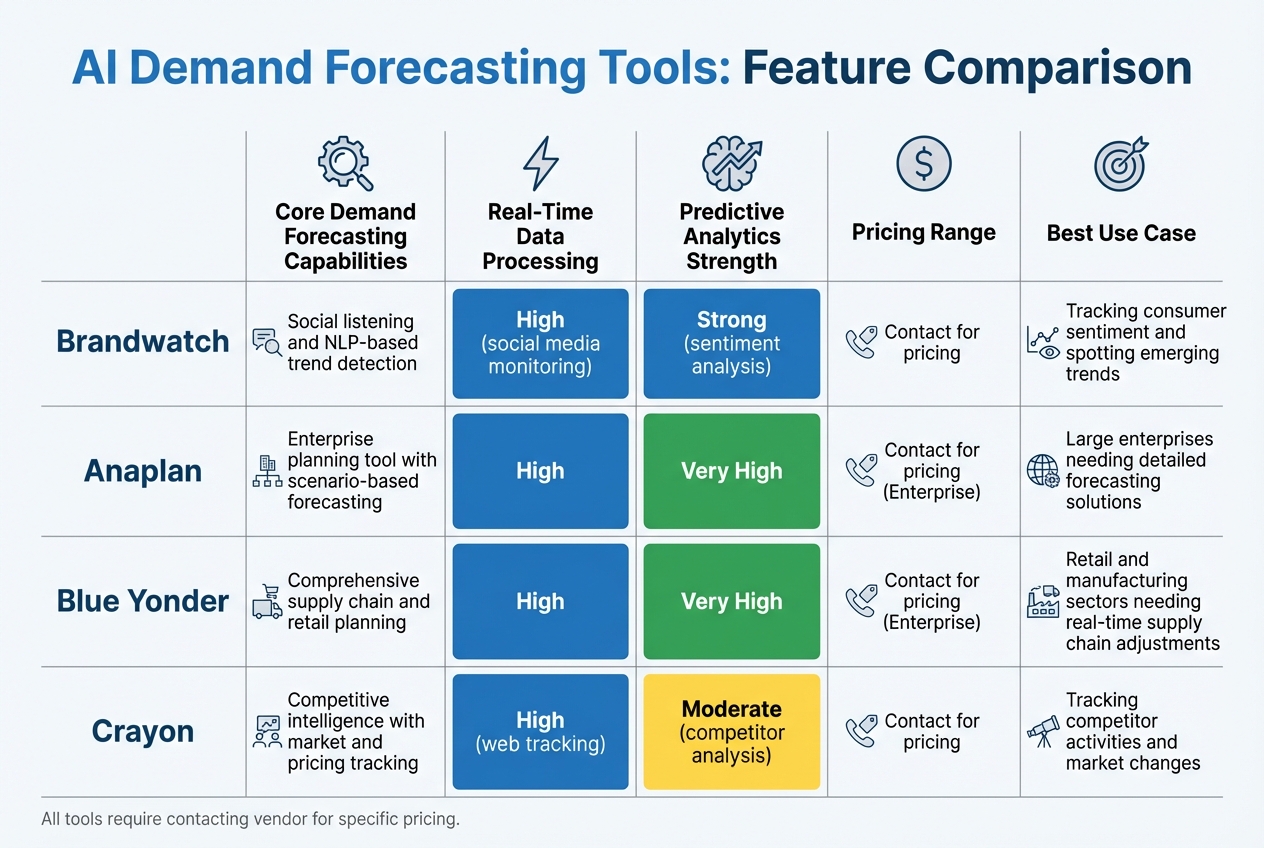
AI Demand Forecasting Tools Comparison: Features, Capabilities and Best Use Cases
Tool Comparison Overview
The table below provides a snapshot of how some of the top AI tools perform in demand analysis. It highlights their core features, real-time processing capabilities, predictive analytics strengths, pricing structure, and the best scenarios for their use.
| Tool Name | Core Demand Forecasting Capabilities | Real-Time Data Processing | Predictive Analytics Strength | Pricing Range (USD) | Best Use Case |
|---|---|---|---|---|---|
| Brandwatch | Social listening and NLP-based trend detection | High (social media monitoring) | Strong (sentiment analysis) | Contact for pricing | Tracking consumer sentiment and spotting emerging trends |
| Anaplan | Enterprise planning tool with scenario-based forecasting | High | Very High | Contact for pricing (Enterprise) | Ideal for large enterprises needing detailed forecasting solutions |
| Blue Yonder | Comprehensive supply chain and retail planning | High | Very High | Contact for pricing (Enterprise) | Perfect for retail and manufacturing sectors needing real-time supply chain adjustments |
| Crayon | Competitive intelligence with market and pricing tracking | High (web tracking) | Moderate (competitor analysis) | Contact for pricing | Best for tracking competitor activities and market changes |
This comparison makes it easier to match the right tool to specific industry needs, ensuring businesses can choose the most effective solution for their forecasting and analysis tasks.
Choosing the Right AI Tool for Your Needs
Picking the right AI tool hinges on your business size, goals, and timeline. For startups and small businesses, the focus is on quick results - usually within days to two weeks - at a cost of less than $200 per month. Mid-market companies often require a setup period of 1–3 months, with costs ranging from $50–$150 per user monthly. Enterprises, on the other hand, may spend 3–6 months implementing a solution, with expenses exceeding $1,000 per user per month.
When evaluating tools, prioritize data integration over flashy visuals. Your chosen AI platform should connect effortlessly with your existing systems, like your CRM or ERP, and incorporate external data sources such as social media trends or even weather patterns. For example, Books-A-Million used AI to analyze over 700 potential sites in just 72 hours, saving each analyst approximately 25 hours per week. This kind of seamless integration not only streamlines workflows but also lays the groundwork for clear and actionable insights.
Transparency is key - opt for "glass box" AI tools rather than opaque "black box" algorithms. When stakeholders can see and understand the factors driving a forecast, they’re more likely to trust and act on the insights. Companies leveraging AI for predictive analytics report a 20% increase in decision-making accuracy and a 30% rise in operational efficiency.
Before fully committing, consider running a six-week pilot program. Test the tool with a clear hypothesis, such as predicting next-quarter demand within ±10% accuracy or identifying competitor price changes within 48 hours. This approach can help you gauge the tool's effectiveness and ROI. In fact, nearly 74% of organizations report that their most advanced AI projects are meeting or exceeding ROI expectations.
"Your job will not be taken by AI. It will be taken by a person who knows how to use AI." - Christina Inge
FAQs
What data sources do I need for accurate AI demand forecasting?
Accurate AI demand forecasting relies on pulling data from a variety of sources that reflect both internal operations and external conditions. Some of the most important sources include historical sales data, which helps identify patterns and trends, and real-time market data, which captures current shifts in demand. Broader indicators like macroeconomic factors - such as interest rates and unemployment levels - add another layer of context.
To make predictions even sharper, external data plays a big role. Insights from supply chain knowledge graphs, customer behavior analytics, and industry trend reports provide valuable context that complements internal data. The way these datasets are collected and structured directly impacts the accuracy of forecasts, ultimately leading to more informed decisions across the supply chain.
How do I measure ROI from an AI demand forecasting pilot?
To get a clear picture of ROI, prioritize measurable benefits such as better forecast accuracy, lower inventory costs, and reduced lost sales. Start by setting clear, measurable KPIs from the beginning. Track these metrics consistently over time and weigh the costs of the pilot program against the financial benefits achieved. Incorporate tools like sensitivity analysis and ongoing monitoring to keep your ROI calculations accurate as the AI system continues to develop and improve.
How can AI forecast demand for new products with little history?
AI predicts demand for new products by analyzing trends, comparable items, and consumer behavior patterns. Using advanced machine learning, it pulls data from various sources - such as social media activity, competitor performance, and external influences - to generate reliable forecasts. Even when there’s little or no historical sales data, this method helps businesses gauge demand with confidence, allowing them to plan more effectively.